Michael S. Rogers Quotes
The idea that you can be totally anonymous in the digital age is increasingly hard to execute.
Michael S. Rogers, Navy Admiral, Director, National Security Agency, Commander, U.S. Cyber Command, C-SPAN, June 10, 2014
Sourced by: Eigen's Political and Historical Quotations


The FBI had obtained a court order requiring apple to write software that could hack into a person's iPhone. Apple, with most other hi-tech companies in support, filed a motion with the court opposing the order. The FBI shortly thereafter withdrew its request for the order saying that they had found other solutions, when they had originally told the court that there were no other solutions.


He was the Chairman of the Senate Judiciary Committee. The NSA had hacked into the servers of these firms and others that were located out of the country. (They would need to have a warrant if inside the country.) The companies had never known it until Edward Snowden made this practice public. The result was, the public was learning that there was no privacy in any of their e-mail, social media activity, exchange of photos or videos or anything else. The companies feared that this would then harm their business, and that the techniques NSA used to hack there servers would then be discovered and used by others to steal identities, credit cards and do such other damage to customers. Even if the particular hacking methods were not leaked to the bad guys, they, knowing that the servers were vulnerable, would be encouraged to work to figure it out.

The call for embedding the balance in the law is in contrast to the past where the balance was left to the discretion of the intelligence agency leadership but technological limitations curtailed their ability to unbalance things too much.

The FBI had obtained a court order requiring apple to write software that could hack into a person's iPhone. Apple, with most other hi-tech companies in support, filed a motion with the court opposing the order. The FBI shortly thereafter withdrew its request for the order saying that they had found other solutions, when they had originally told the court that there were no other solutions. The issue however was and remains a very difficult political, moral, ethical, and legal conundrum.
_0_thumbnail_47x47.jpg)


Ironically, it was the case that there was even more hacking that was motivated by people who just wanted to prove that they could ‘breach a system’ and the more an organization claims that its data is secure, the more motivation there is for these hackers to demonstrate their prowess.

See {635177} for the event that triggered the statement.

He had developed a mathematical algorithm for a computer encryption that would take years to break even for the most powerful supercomputers. The U. S. Government tried to prevent him from publishing the technique and formula, but he went ahead anyway. They then tried to accuse him of violating an Arms Export Control Act for allowing people in other countries to see it, but there were no legal grounds for indictment. The strong encryption method, PGP, can be used with almost any PC and internet transmission of files.


Critics of NSA observe that there is a fundamental difference between government invasion of privacy and that of corporations in that the Government can deprive a citizen of his/her liberty or even life while corporations can just invade their privacy, embarrass them, or hurt their economic status. Counter-critics rejoinder is that 99 percent of all the specific abuses of privacy and damages to citizens in the U. S. from massive data collection are made by private corporations, not the NSA or other government agencies.

In addition to the hackers who break into websites for monetary gain, or spying for companies or governments, there are many why just love the challenge of hacking into computers and websites that authorities claim is secure. The reality is that there is no way to absolutely sure a computer or its contents as long as it is connected to the Internet. Those computers and sites that have nothing to hide and do not present a challenge to hackers of this type rarely have problems from them; their vulnerability is to the other hacker who can utilize their computer slo hack still others of paralyze their computer to extract a ransom for functionality. The analogy of the hackers to the barbarian hordes sacking Ancient Rome and the Mongolian hordes sacking Europe is one that many appreciated,

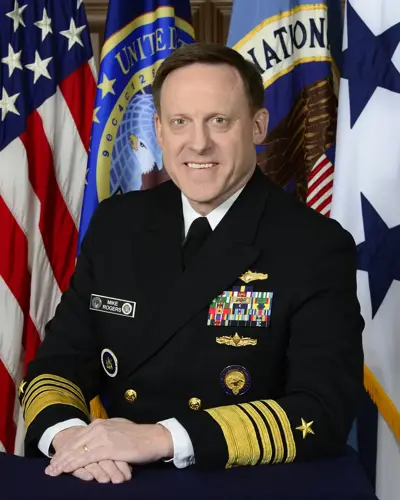
Michael S. Rogers is a former United States Navy admiral who served as the second commander of the United States Cyber Command (USCYBERCOM). He concurrently served as the 17th director of the National Security Agency (NSA) and as chief of the Central Security Service (CSS) from April 3, 2014. Prior to that, Rogers served as the Commander of the Tenth Fleet and Commander of the United States Fleet Cyber Command. During his tenure, he helped transform and elevate U.S. Cyber Command into a unified combatant command. He relinquished command on May 4, 2018 to his successor, Paul M. Nakasone. He retired from active duty in the United States Navy on June 1, 2018.
