William Golding Quotes
We've got to have rules and obey them. After all, we're not savages. We're English, and the English are best at everything.
Golding, William. Lord of the Flies. Faber and Faber, 1954, p. 42.


Akhito, then a very young man, had been under the tutelage of imperial and military men chosen for the task. Their racism and conviction of Japanese innate superiority persists to this day among many of the Japanese right.

The ancient Russian community of Chersonesos near Sebastopol had been rebuilt upon, land that had been graverobbed, and looted of materials of value. However, the Countess and other Russian and world intellectuals lobbied the Czar for Royal Protection of the archeological site. Not unlike the dilemma faced by national and local government even today, the Czar protected the site which is the only reason we have this marvelous resource still as a rich laboratory today. However, the Czar like more modern political leaders acted not from an intellectual conviction of the value to the archeology or the “treasures” which might be found, but from the avoidance of world reputation as “barbarians.”


The concept of race then was not what it is today where it is, if anything, a genetic or anthropological distinction. Then race was a combination of blood (genetics) and culture. Wittgenstein, an Austrian by nationality, considered himself German racially. This concept of race was common in 1914 and rose to be absolute in the Nazi era. So the absorption of Austria by Germany did not seem to most Austrians a diminution of anything but a natural recognition of the unity of one people—the German race. Wittgenstein was not alone among intellectual “Germans” who believed the English “race” superior. Their ability to operate a democracy without a powerful leader was considered a great strength as was the diffusion of power and control were both admirable accomplishments which some German intellectuals envied.


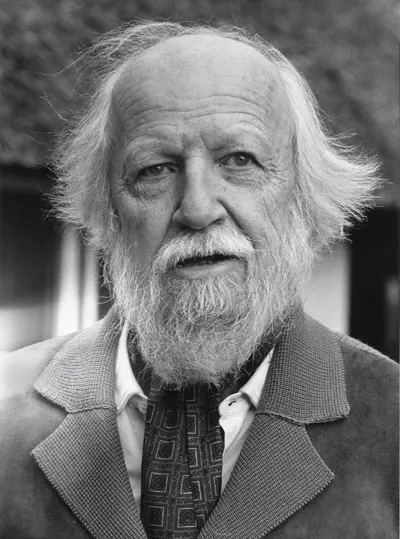
Sir William Gerald Golding, CBE FRSL was a Cornish novelist, playwright, and poet. Best known for his debut novel Lord of the Flies (1954), he would go on to publish another twelve volumes of fiction in his lifetime. In 1980, he was awarded the Booker Prize for Rites of Passage, the first novel in what became his sea trilogy, To the Ends of the Earth. He was awarded the Nobel Prize in Literature in 1983.
