Douglas Feith Quotes
Well we are hoping that the power of the community of free nations is such that our sovereignty our rights are not going to be challenged by anybody who's going try to undermine the freedom, the openness of our societies and our security.
Feith, Douglas J. "Interview with Douglas Feith." BBC News, 20 Feb. 2003.


The declaration was signed by 52 Nobel Scientists at the height of the McCarthy era.


This was the first time a Cabinet Member had ever addressed Congress. He had just concluded an alliance with Soviet Russia for fighting Hitler and Japan in the Second World War. Some were uneasy about an alliance with the Communist state. However, the Congress approved overwhelmingly.

One major problem at the time was that the Soviet Union was supporting and instigating revolutions in many parts of the world. When most nations of the UN wanted to provide peace keeping troops to quell the conflict, the Russians would veto and block the effort, Vandenberg wanted the UN to change the rules regarding the veto. The original right of veto for the major nations was originally included at the insistence of the United States and many Americans did not want to give it up or have any exceptions lest there be more. The Russians at that time also did not want to give up any of their veto powers. Another method that Vandenberg wanted to solve the Russian peacekeeping blockage problem was for America to engage in more collective security pacts so that action could be taken without UN Security Council unanimity by going around the UN.


This was a very important statement for the President to make. At the time there was a very conservative right wing that was advocating withdrawing from the UN or at the very least not paying such a large share of the UN funds for operation.


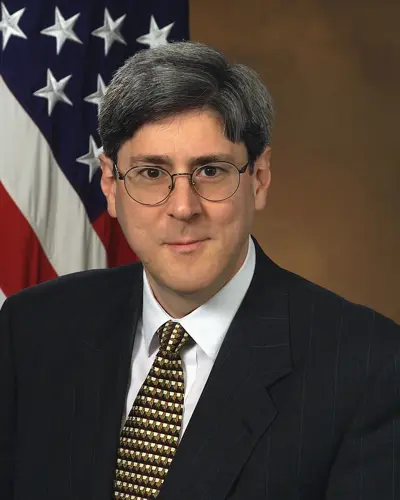
Douglas Jay Feith served as the under secretary of Defense for Policy for United States president George W. Bush, from July 2001 until August 2005. He is a senior fellow at the Hudson Institute, a conservative think tank.
