Susan Rice Quotes
Well, I think by any expectation South Africa has come a tremendously long way. We've seen a society that many people thought couldn't withstand a peaceful transition to democracy without a great deal of violence, in fact, make that transition and do it in relative peace and security.
Rice, Susan. Interview. PBS NewsHour, Public Broadcasting Service, 1999.


Helen Suzman, 1917–2009 was a white South African member of Parliament representing Capetown. She came from a Jewish English background and was the leader of the Progressive Party which was the opposition to the Nationalist party that had established the Fascist style Aparteid government where the 10% white population dominated and ruled the 90% black and Asian population. When all the other progressive MPs lost their seats, Suzman was the only member of the South African Parliament who totally opposed the racist apartheid of South Africa. She had little power to change or block Apartheid laws being only a single MP, but her eloquence and vigorous verbal demand for freedom and equality for blacks provided a focal point for foreign boycotts to produce change in South Africa. However, she did not publicly advocate revolution and violence. As a result most of the militant blacks did not value or even follow her activities to end apartheid, and many had no idea who she was. However, Mandela, imprisoned on Robin Island at the time, not only followed her activities, but sent frequent compliments and notes of encouragement to white opponents of the government and apartheid even though many did not support the armed violence that had become necessary to produce change. Mandela knew that there would be core of a white leadership that would favor one-man-one-vote which would make South Africa a black-dominated government when the apartheid Nationalists could be defeated. Mandela was like a great chess player playing a current game but thinking 5 and 6 moves in advance even while in prison. Suzman was one of Mandela’s leading white supporters after the regime change.


South Africa’s transition from apartheid white minority rule to an interracial society with Black majority rule was one of the great political achievements in history. The Black leadership set a tone of reconciliation and inclusiveness that there was neither back retribution and vengeance, nor extensive white flight. Tutu and Nelson Mandella were two of those most resonsible for the leadership, but the good will and Christian charity of the South African blacks was the key to the success where all other white dominated African nations were NOT able to transition without extensive violence and/or flight.

This is an excellent example of the twisted, self-fulfilling logic of the Afrikaners in justifying apartheid. Many Afrikaners were inveterate racists, and were also usually armed which was a rural tradition of their early immigration and the Zulu and Boer Wars. Those whites would cause a riot if a black was allowed into a white audience performance. That in turn would cause chaos. Therefore mixed audiences could not be allowed. It never occurred to Botha and his colleagues that the government’s responsibility was to control and restrict the white rioters and instigators. This was not unique Afrikaner thinking; the same logic prevailed throughout the American South in the Jim Crowe segregation era.


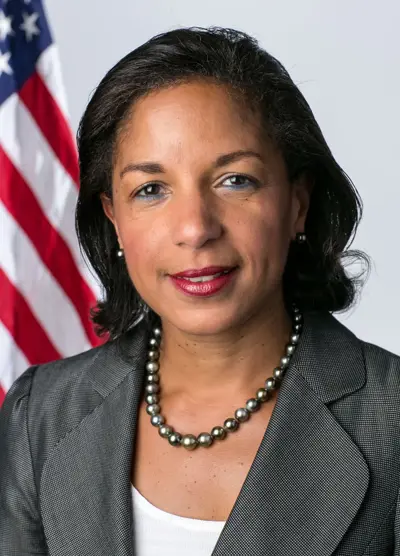
Susan Elizabeth Rice is an American diplomat, policy advisor, and public official serving as Director of the United States Domestic Policy Council since 2021. A member of the Democratic Party, Rice served as the 27th U.S. ambassador to the United Nations from 2009 to 2013 and as the 24th U.S. national security advisor from 2013 to 2017.
