Ted Kennedy Quotes
We want to support our troops because they didn't make the decision to go there... but I don't think it should be open-ended. We ought to have a benchmark where the administration has to come back and give us a report.
Kennedy, Edward M. Interview. Meet the Press, NBC, 21 Jan. 2007.


Four years later the President embarked on a nation-building effort in Iraq which was beset with many problems.


During the Iraq War, the Congressman partially changed his mind the following year and called for a plan to move American troops to the periphery of the fighting. A highly decorated war hero with two Purple Hearts, he was then called a coward, by some Republican members of Congress and the Bush Administration—almost always by people who had never served in the military and often sought and obtained deferments.
3 years later he led America on a huge invasion and nation building project in Iraq. It turned out that had he listened to his own advice and not flip-flopped, the huge cost of the Iraq War might have been avoided.


War and international conflict had become very complicated in modern times. Americans and most other people associated victory in war with unconditional surrender. However, since the unconditional surrender is of WWII, no conflict has ended with an unconditional surrender.


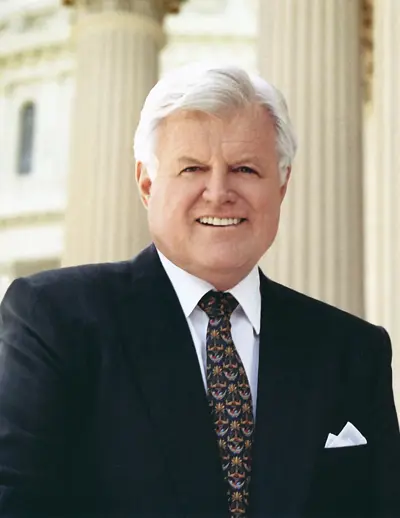
Edward Moore Kennedy was an American politician and lawyer who served as a U.S. Senator from Massachusetts for almost 47 years, from 1962 until his death in 2009. A member of the Democratic Party and the Kennedy political family, he was the second most senior member of the Senate when he died and is the fourth-longest-continuously-serving senator in United States history. Kennedy was the younger brother of President John F. Kennedy and U.S. Attorney General and U.S. Senator Robert F. Kennedy, and was the father of Congressman Patrick J. Kennedy.
