Gouverneur Morris Quotes
We the People of the United States, in Order to form a more perfect Union, establish Justice, insure domestic Tranquility, provide for the common defense, promote the general Welfare, and secure the Blessings of Liberty to ourselves and our Posterity, do ordain and establish this Constitution for the United States of America.
United States, Constitutional Convention. Constitution of the United States of America. 1787, Preamble.


The First and Official Use of the Name

This was his political speech about the importance of the state militia. However, in the War of 1812 in September the British attacked and burned the town of Portland which the militia feebly tried to defend. See his private view then: {613332}.


Note the date. Thanksgiving was proclaimed at a slightly different time. This was not only the official Thanksgiving Day proclamation, but the first presidential proclamation of any kind issued by an American President. Ironically, this proclamation was lost for 130 years, and was not found again until 1921 when it was returned to the National Archives.

The political machine of New York City, unlike most others in the Northeast were supporters of the Southern position on slavery. They had strong economic relations with the Southern planters and wanted to keep the federal government far away from state and local affairs.


This statement has been broadly criticized for being factually incorrect and a contorted interpretation of the constitution and American values. See linked quote(s) for examples.


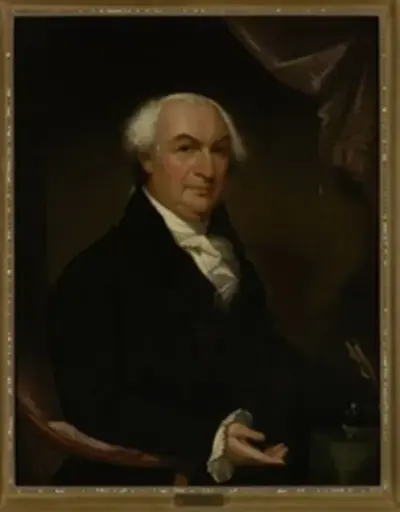
Gouverneur Morris was an American statesman, a Founding Father of the United States, and a signatory to the Articles of Confederation and the United States Constitution. He wrote the Preamble to the United States Constitution and has been called the "Penman of the Constitution." In an era when most Americans thought of themselves as citizens of their respective states, Morris advanced the idea of being a citizen of a single union of states. He was also one of the most outspoken opponents of slavery among all of those who were present at the Constitutional Convention. He represented New York in the United States Senate from 1800 to 1803.
