Chimamanda Ngozi Adichie Quotes
We teach girls to shrink themselves, to make themselves smaller. We say to girls: 'You can have ambition, but not too much. You should aim to be successful, but not too successful. Otherwise, you will threaten the man.' Because I am female, I am expected to aspire to marriage. I am expected to make my life choices, always keeping in mind that marriage is the most important. Now, marriage can be a source of joy and love and mutual support, but why do we teach girls to aspire to marriage and we don't teach boys the same?
Adichie, Chimamanda Ngozi. We Should All Be Feminists. Anchor Books, 2014, pp. 27-28.


This absurd statement was actually believed by many colonial Americans—male and female--as Addison’s Spectator was a very popular publication in Colonial America. The claim that women who are interested in political affairs and discusses them will rapidly lose her beauty had no basis in fact. None the less, the quotation was sufficient to intimidate many colonial women from discussing politics with her family or friends.


This quotation has become very well-known, The Israel military was the first Industrial democracies to allow women in combat. It is also the only one which drafts women into the military. Such sexism is very typical of a minority of the Israeli population which favors the traditional Orthodox role of females in society, but the vast majority is very liberal and modern regarding women, and the Supreme Court has generally upheld women’s equality except where there are conflicts with Orthodox religious institutions.


This was her last public speech. In general, when women would speak in public, they would be ridiculed and castigated by the press which reflected a macho cultural view that women should be seen and not heard,


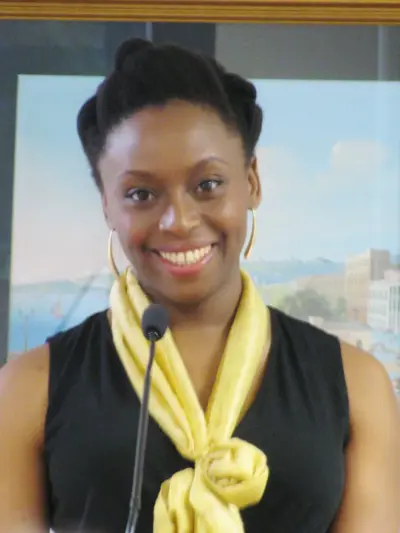
Chimamanda Ngozi Adichie is a Nigerian writer whose works range from novels to short stories to nonfiction. She was described in The Times Literary Supplement as "the most prominent" of a "procession of critically acclaimed young anglophone authors [which] is succeeding in attracting a new generation of readers to African literature", particularly in her second home, the United States.
