Joseph Addison Quotes
A political woman loses her beauty within a year.
This absurd statement was actually believed by many colonial Americans—male and female--as Addison’s Spectator was a very popular publication in Colonial America. The claim that women who are interested in political affairs and discusses them will rapidly lose her beauty had no basis in fact. None the less, the quotation was sufficient to intimidate many colonial women from discussing politics with her family or friends.
Joseph Addison, 1672-1719, English Secretary of State (Whig), Essayist, The Spectator
Sourced by: Eigen's Political and Historical Quotations


Mrs. Thatcher was not a fan of feminists because so many of them were also liberal in their politics. However, she herself and her life example was one of the great feminist statements of the 20th century. She also held a disrespect for men that was typical of the most ardent feminists.


This quotation has become very well-known, The Israel military was the first Industrial democracies to allow women in combat. It is also the only one which drafts women into the military. Such sexism is very typical of a minority of the Israeli population which favors the traditional Orthodox role of females in society, but the vast majority is very liberal and modern regarding women, and the Supreme Court has generally upheld women’s equality except where there are conflicts with Orthodox religious institutions.

She was writing about the problems that accomplished women face in the then contemporary American society and the choice of wardrobe was one of them.


The Greek culture was quite sexist. However, all cultures had observed strong women, some who ruled and others where wives or mistresses of rulers were very influential if not powerful.
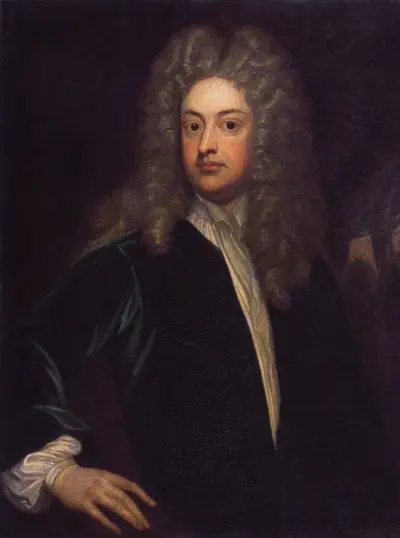
Joseph Addison was an English essayist, poet, playwright and politician. He was the eldest son of The Reverend Lancelot Addison. His name is usually remembered alongside that of his long-standing friend Richard Steele, with whom he founded The Spectator magazine. His simple prose style marked the end of the mannerisms and conventional classical images of the 17th century.
