Vladimir Lenin Quotes
We shall not bind ourselves by treaties. We shall not allow ourselves to be entangled by treaties. We reject all clauses on plunder and violence, but we shall welcome all clauses containing provisions for good-neighbourly relations and all economic agreements; we cannot reject these.
Lenin, Vladimir I. Collected Works. Vol. 26, Progress Publishers, 1964, p. 255.


The minister had refused to be pressured by the George W. Bush Administration to sign an agreement with the US agreeing never to turn over an American or a foreign national working for America to the International Criminal Court (ICC). Even if a Peruvian or other non-American were working for an American Agency as an informant, agent, or other role, the country could not respect the treaty obligations that they had already made with regard to the ICC. Peru was “punished” losing $4 million aid. Nations were so “punished” while the State Department was spending huge sums to remedy negative opinion that so many nations had developed for the US during the George W. Bush administration. See {585493},65901 & {585496}, for more quotations on this. The US did not join the ICC Treaty as in some countries political considerations and different ethical values have labeled some American legitimate behavior as criminal and have attempted to hold individuals responsible for carrying out lawful orders. So many foreigners could understand the United States not wanting to deny Americans and others in the United States the protection of the United States Constitution, there was ire at the US pressuring others to boycott the ICC and break their existing treaties.


Many of the French Revolutionists viewed the French Revolution as only the first step in a European revolution where all monarchies in Europe would be overthrown and popular rule installed throughout the continent. See Warville {585774} for an example. This obviously made the crowned heads of Europe and their governments very nervous. Other French Revolutionaries like Robespierre, however, wanted to assure the rest of Europe that the revolution was only a French affair so that they should not send troops to overthrow the French Revolution.


Inscribed in the John Adams Building of the Library of Congress. On this subject Jefferson was in agreement with George Washington {37176} and his political opponent, John Adams {592705}.


When whites first came to America, the Iroquois, were the most sophisticated Native Americans. They were actually a confederation of 5 different tribes each of which was composed if many clans. Although fierce warriors, they had agreed not to fight each other and to assist if any were attacked. They developed a strong agricultural base, to go with the fishing and hunting, and their confederation were very aggressive and sophisticated traders taking them far from their upstate New York “capitol.” Their governmental structure was quite sophisticated with an elaborate, formal, system of checks and balances, multi-cameral legislatures that recognized numbers of citizens, power and wealth, and even cultural traditions. They were literate, capitalistic and globalistic in that they wanted to trade with all. They had written laws, and women had a role that was unique in world history in that only women owned property in a matrilineal society. Further, it was only the Clan Mothers who voted for the 50 Sachems (~Senators)—but their selections had to be accepted by the people they represented. Ironically the descendants of the Iroquois who remained in New York became a very successful Native American group. In the 2000 census, the average Indian in New York State earned the same income as the average White with no Indian gambling money.


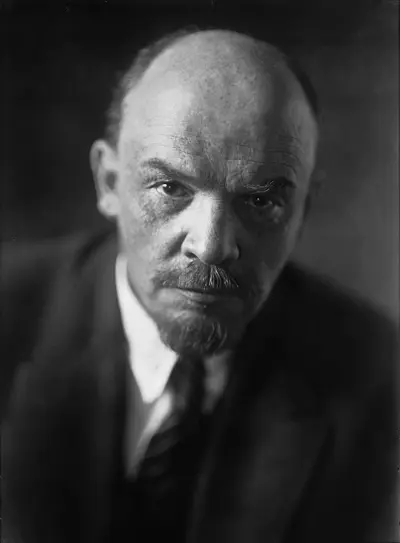
Vladimir Ilyich Ulyanov, better known by his alias Lenin, was a Russian revolutionary, politician, and political theorist. He served as the first and founding head of government of Soviet Russia from 1917 to 1924 and of the Soviet Union from 1922 to 1924. Under his administration, Russia, and later the Soviet Union, became a one-party socialist state governed by the Soviet Communist Party. A Marxist, he developed a variant of this communist ideology known as Leninism.
