Anastas Ivanovich Mikoyan Quotes
We see your willingness to die beautifully. We don’t see the need to die beautifully.
During the Cuban Missle Crises, Fidel Castro recommended that the Russians use the nuclear weaponin based in Cuba which would have assured that all Cubans and many Russians would die with the American retaliation.
Anastas Ivanovich Mikoyan, 1895-1978, Vice Premier of the Soviet Union, Statement to Fidel Castro during the Cuban Missile Crisis, 1963
Sourced by: Eigen's Political and Historical Quotations


Quintus Horatius Flaccus. This famous quotation has been echoed in virtually every language and every country of the world. However, see Ernest Hemingway for a counter view.

No one knows whether or not Castro was really sincere in making this offer. The Russians rejected it of course. If they made a first strike on the United States, Russia would have been crippled completely by the retaliation, and they knew it. Castro knew that they knew it and might have been counting on the fact that the Russians would reject his heroic offer. Alternatively, he may have been enough of a fanatic to sacrifice his own life that that of every single Cuban.


This line was used in the WPA Federal Theater Project. The play was closed down, because the State Department was distressed that the Federal Theater quoting heads of State might be insulting to the world leaders. Mussolini was another character in the play and he was depicted as the boorish thug that he turned out to be. It was that which offended the government officials who closed the show before it could open. FDR used a similar line 6 years later. See {32529} . Dolores Ibarruri in the Spanish Civil War is quoted with a similar phrase at about the same time. See {604321}

Referring to the British war dead:

The people of the American colonies were outraged by the Stamp Act which in effect placed a tax on almost everything operational in the economy at the time by making people buy government stamps to seal virtually all legal documents. Ingersoll had become the icon of the hated Stamp Tax collector holding what was then a very senior position in the Royalist government. The Sons of Liberty, today considered patriots, but then looked upon by the government as a groups of hooligan terrorists, caught up with Ingersoll and kidnapped him and took him to a house in Wethersfield. There he was roughed up and then given the choice of resigning his Stamp Act position or being hanged. He signed his resignation with this statement. The quotation and the incident is used by people who glorify the patriotism and the risk that the Sons of Liberty took for their beliefs. Others, use the quote and incident to illustrate that when such behavior occurs in countries today we often refer to it as terrorism such as in the Iraq War insurgency where the insurgents threatened government officials with death if the did not resign and often made good on their threat. A particular interesting historical story is Ingersoll’s son, Jared Jr. Unlike his Royalist father, young Ingersoll, Jared Jr., was an active patriot, serving in public office and was one of the signers of the U.S. Constitution.


It is hard to believe that there are any people in the world that would try and educate youth in this manner, but it is common amongst the ultra fundamentalist Muslims to day. However, it is very similar to what the Christians, including the Pope, preached a millennium ago and what the Japanese preached to their young Kamakasi in WWII.


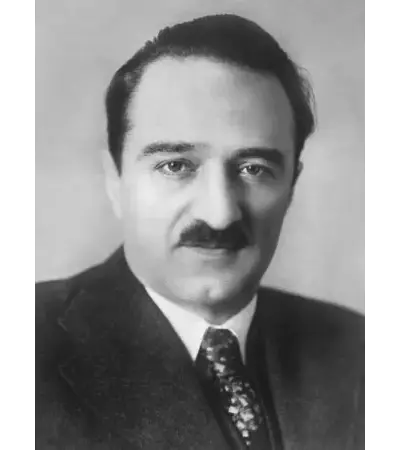
Anastas Ivanovich Mikoyan was an Armenian Communist revolutionary, Old Bolshevik and Soviet statesman during the mandates of Lenin, Stalin, Khrushchev and Brezhnev. He was the only Soviet politician who managed to remain at the highest levels of power within the Communist Party of the Soviet Union, as that power oscillated between the Central Committee and the Politburo, from the latter days of Lenin's rule, throughout the eras of Stalin and Khrushchev, until his peaceful retirement after the first months of Brezhnev's rule.
