Wei Jingsheng Quotes
We must ask the high cadres ... When you suppressed the rights of others to express freely their political views, did you secure your own?
Wei, Jingsheng. "A Twentieth-Century Bastille." The Courage to Stand Alone: Letters from Prison and Other Writings, translated by Kristina M. Torgeson, Viking, 1997.


Her organization does survey research throughout the world. The “freedom” to conduct a survey does not exist in many if not most of the nations around the world. Even a democratic country like India requires government approval to conduct a survey.


This quotation is a great demonstration of how much wiser and the better politician of all the crowned heads of Europe that Queen Victoria was. There were stirrings of freedom and desire for parliamentary government throughout Europe. Queen Victoria, even though and perhaps because she was a young woman, had a great feel for fairness and reasonableness and had read a great deal of history. There were some radical red socialists calling for complete radical revolution scaring European Royalty profoundly. They reacted very conservatively and with reaction, reverting to more tyrannical practices of the past urged in that path by very conservative, right wing advisors. Victoria also had little respect for some of the monarchs who had little interest in their people and much with their personal power and wealth. In the end, it was England which was the only nation which never had a serious radical socialist / communist threat, and that had much to do with Victoria’s political acumen and wisdom.


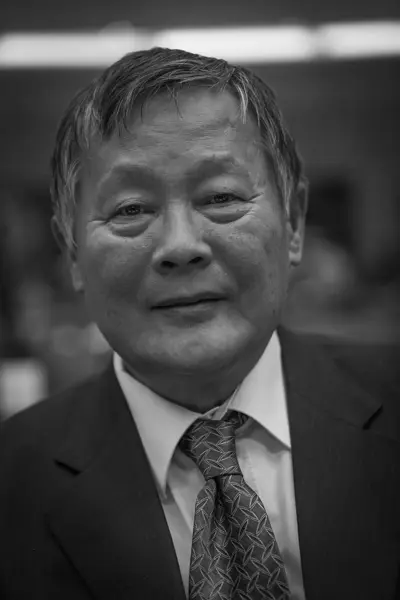
Wei Jingsheng is a Chinese human rights activist who is known for his involvement in the Chinese democracy movement. He is most prominent for having authored the essay "The Fifth Modernization", which was posted on the Democracy Wall in Beijing in 1978. Due to the manifesto, Wei was arrested and convicted of "counter-revolutionary" activities, and was detained as a political prisoner from 1979–93. Released briefly in 1993, Wei continued with his dissident activities by speaking to visiting journalists, and was imprisoned again from 1994–97, spending a total of 18 years in different prisons. He was deported to the United States on 16 November 1997, on medical parole. Still a Chinese citizen, in 1998 Wei established the Wei Jingsheng Foundation in New York City (now based in Washington D.C.) whose stated aim is to work to improve human rights and democratization in China.
