Bob Dole Quotes
We like to make tough speeches, but we don't like to make tough choices.
Robert J. Dole, U.S. Senate Minority and Majority Leader (Republican, KS), Republican Presidential Nominee, New York Times, October 7, 1990
Sourced by: Eigen's Political and Historical Quotations


Some scholars credit this quote earlier to Comedian Will Rogers.


This turns out to be very much a cultural phenomenon. Amongst educated Englishmen and many scientists and philosophers from America and other cultures but in some cultures opinions stated without passion are often not believed�this is particularly true in the Middle East but exists in many subcultures of America. In science, and the logical philosophy that Russell was so expert in, either you could prove something or you could not. If you could, the passion was unnecessary. If you could not, it was irrelevant. However, in most political issues, except those based on science, most assertions are not provable and although there may be some evidence for a view, it is not determinative. So volume. Bombast, and passion tries to persuade where logic cannot. Russell and many scientists and Philosophers distrust these statements, but the politician must deal with most of them, as public policy must be made whether the issue is scientifically demonstrable or not. Life and society must go on. However, when scientists testify before Congressional committees or in other political arenas, their lack of passion is taken by many as a lack of conviction or a lack of surety, while if they did speak with great passion, they would break the norms of the scientific community in which they work, for it is regarded as unethical to persuade people with anything but the evidence and logic.

One of the reason’s that TR was so popular was that he was a very candid, clear and dynamic speaker who always said what he meant and meant what he said.


More so than any other presidential candidate in history, Trump repeatedly told outright lies and exaggerated most of what had a grain of truth. However, he tended not to see this as lying, and not to be embarrassed when caught by fact checkers, journalists or other candidates. His response was almost always to point out how much public support he had, how many people attended the speech where he made the statement, how well he was doing in the polls. He had a hard core group of supports who did not seem to be concerned with this behavior, and it was difficult for opponents or even journalists to argue that those supports were ignorant, foolish or in error as explained in this quotation.

While England was under attack by the Germans in World War II, Congress was debating Roosevelt's proposal for lend-lease. The president had set the passage of this legislation as his main priority, and a critical meeting between Churchill and Roosevelt was deferred until passage was obtained. Roosevelt dispatched Hopkins to London. Urging a prompt meeting, Hopkins cabled:

_0_thumbnail_47x47.jpg)


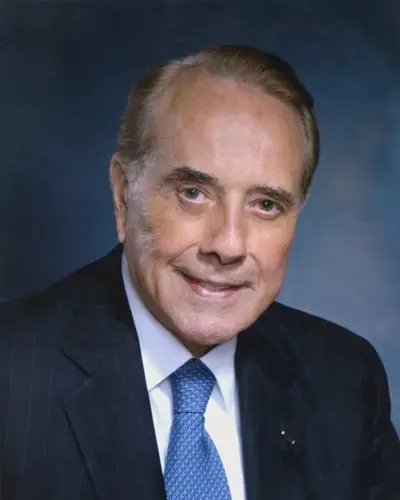
Robert Joseph Dole is an American politician and attorney who represented Kansas in the U.S. Senate from 1969 to 1996. He was the Republican Leader of the United States Senate during the final 11 years of his tenure, including three nonconsecutive years as Senate Majority Leader. Prior to his 27 years in the Senate, he served in the U.S. House of Representatives from 1961 to 1969. Dole was also the Republican presidential nominee in the 1996 election and the vice presidential nominee in the 1976 election.
