Daniel O'Connell Quotes
We have read with the deepest affliction, not unmixed with some surprise and much indignation, your detailed and anxious vindication of the most hideous crime that has ever stained humanity--the slavery of men of color in the United States of America. We are lost in utter amazement at the perversion of mind and depravity of heart which your address evinces. How can the generous, the charitable, the humane, the noble emotions of the Irish heart have become extinct amongst you? How can your nature be so totally changed as that you should become the apologists and advocates of that execrable system …. It was not in Ireland you learned this cruelty. Your mothers were gentle, kind, and humane. Their bosoms overflowed with the honey of human charity. Your sisters are, probably, many of them, still amongst us, and participate in all that is good and benevolent in sentiment and action. How, then, can you have become so depraved? How can your souls have become stained with a darkness blacker than the negro's skin?
The Irish generally were not very sympathetic to the abolitionist movement and many saw the Negro as a competitor for jobs. However, the Republicans in Ireland left no doubt where they stood, and they castigated their American Brethren for their pro-slavery position. This particular letter was reprinted by the New England Anti-Slavery Tract Association and was read and appreciated by most abolitionists of both races.
Daniel O'Connell, 1775-1847, Irish Nationalist & Lord Mayor of Dublin, Letter for the Loyal National Repeal Association of Ireland to the Cincinnati Irish Repeal Association in America, October 11, 1843
Sourced by: Eigen's Political and Historical Quotations


The issue of slavery which had been suppressed in Congress for the first decades of the nation broke out when Missouri statehood was considered. By previous agreement, slavery was not even discussed in Congress but the time period elapsed. Tallmadge not only proposed that no more slaves could come into Missouri {613176} but most shocking to the Southerners was that every person born in the new state would be free at the age of 25. In a generation, there would be no more slavery in Missouri and there would be no economic compensation for slave owners at all. The House of Representatives accepted the amendment, but it failed in the Senate. At that time, Senators were not elected by voters but were appointed by the state legislators and the Southern slave states had a disproportionate share of the senate from a population point of view. But what this quotation shows clearly that a majority of the country in 1819 were opposed to slavery and were willing to end it without compensation.

White Africaners were slaughtering Blacks to appropriate their land in violation of English law. See {583901} for a related quotation.


Although Wedgwood was a business man and ceramic manufacturer, he was a staunch abolitionist. He made these medallions by the thousands and gave them to all who would receive them. The text became the motto of the anti-slavery society. It was one of the first examples of a logo – a symbol for a political cause being very effective.


As an entertainer she had toured much of the world and seen American slavery and that of some other nations. She became a staunch abolitionist and like entertainers in the 20th and 21st centuries she used her celebrity to give anti-slavery lectures and perform for audiences where she donated the proceeds of the event to the abolition cause. She is a particularly interesting political figure in that she seems to be one of the first entertainers to perform for a social cause and become an activist.

As just one example of Southern States' reasons, see {583044}. Many of the Northern States had passed laws declaring everyone in the state was free and making it illegal to return or assist in the returning of escaped slaves. The Southerners got the Federal Fugitive Slave Act passed which required all Americans to assist in recapturing escaped slaves. It was the Northern States who claimed states' rights were being trampled. The South was vehemently opposed to States' Rights when it came to allowing individual states to decide who was free and who was not. The Southerners had only one fundamental reason for secession—the maintenance of the Negro slavery system on which much of their economy depended as did their sociology, culture, and way of life.
The first sentence is inscribed on the Jefferson Memorial in Washington DC. The last two sentences are rarely quoted.

As a key member of Lincoln’s cabinet, William H. Seward was most concerned with preserving The Union. However, since the Constitution was written in 1787, there had been compromises made with the pro slavery forces of the South to give them proportionally more political power and to avoid interfering with the institution of slavery. The Dred Scott Supreme Court decision forced the Northern States to actively cooperate in enforcing and maintaining slavery. Large numbers of abolitionists had reached their limit and wanted no more compromises regarding slavery. Mrs. Seward was one of those. This quotation also illustrates the influence that some women had in politics even though women could not vote. Frances Seward was very much a political partner with her husband who was favored to beat Lincoln for the Republican Presidential nomination.
Like so many of his other predictions about America, he saw that the evil of racism and slavery was bound to cause the nation to implode. And this was decades before the Civil War, but the problem was inescapable to a critical observer like de Tocqueville.


He was also himself a ship owner in the slave trade and he was the brother of the leading Rhode Island abolitionist, Moses Brown. See {585793}. Brown became the first American, prosecuted in federal court for illegal slave trading –-- a prosecution brought, in part, by his own brother. He was, however, acquitted.
The editorial was in response to the pro-slavery speeches in the Senate of John C. Calhoun.
The writer was a free Black minister in Maryland. Maryland was a slave state, and the whites were very anti-Lincoln. The free Blacks were under constant scrutiny as there were rumors that the election of Lincoln would be the instigation of a free Black and slave revolt.

As late as 2005 Saudi Arabia was officially listed by the State Department as trafficking in women for sexual exploitation and domestic servitude.


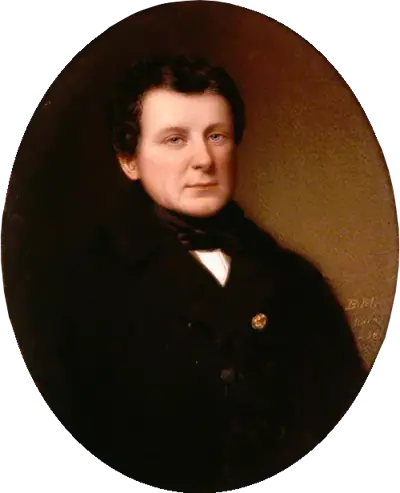
Daniel O'Connell, hailed in his time as The Liberator, was the acknowledged political leader of Ireland's Roman Catholic majority in the first half of the 19th century. His mobilisation of Catholic Ireland through to the poorest class of tenant farmer helped secure Catholic emancipation in 1829 and allowed him to take a seat in the United Kingdom Parliament to which he had twice been elected. At Westminster O'Connell championed liberal and reform causes (he was renowned internationally as an abolitionist) but failed in his declared objective for Ireland: the restoration of a separate Irish Parliament through repeal of the 1800 Acts of Union. Against the background of a growing agrarian crisis and, in his final years, of the Great Irish Famine, O'Connell contended with dissension at home. Criticism of his political compromises and system of patronage led to a split in the national movement he had singularly led.
