Mahathir Mohamad Quotes
We have had dealings with terrorists for a long time. From 1948 until 1990, we had domestic terrorism because the pro-communist groups wanted to overthrow the colonial government.
Mohamad, Mahathir. "Keynote Address at the International Conference on Terrorism." 16 Nov. 2001, Kuala Lumpur, Malaysia.


This quotation provides a succinct view of most non-Western Muslims on the issue of the definition of “terrorist.” A “mujahid” can be translated from Arabic as “freedom fighter.” To the rest of the world, terrorism is defined by the techniques and behavior of the doer. To many Muslims, it is defined only by the motive. If one is defending land or a cause, he cannot be a terrorist. The only terrorist to a Muslim holding this point of view is a person who engages in these violent methods for no reason. The essential difference is that to most of the world a cause—even a worthy one—does not justify any methodology or cost. To the Islamicist who accepts Al-Jozo’s point of view, there is NO methodology that is immoral, especially if one is fighting for a cause, and no cause is more worthy than the spread and dominance of Islam and the world of God. Therefore, for that cause, there can be no terrorism as there can be no ethical or moral limits.


This was an incredible admission for the man who was supposed to resolve the Middle East Conflict where Terrorism was the major issue. He of course could define terrorism but as a diplomat felt that it would not be diplomatic to call terrorists “terrorists” if one wanted to discourage them from their terrorism. He also believed that since Hamas and other terrorist organizations had popular backing, they should not be labeled as “terrorists”. His position is typical of those that many in the United States, Israel and other modern democracies criticize about the United Nations. They argue that diplomatic niceties and attempted face-saving produces an organization that stands for little and condones evil.

Terrorism via bombing of innocent civilians was not an invention of the late 20th Century. England was coping with Irish and anarchistic terrorists in the 19th Century.


He fought in Algeria and other counterinsurgencies and then studied them. He wrote the classic book on counterinsurgency warfare. After all the mistakes the U. S. made after the successful invasion of Iraq, his book and doctrine were very influential in the change in strategy and tactics that turned the Iraq War in our favor.

While that tended to be so at that time, it has not always been so. For example, the civil war in Sri Lanka where suicide bombing vests were developed pitted Sinhalese Buddhists against Tamil Hindus. The 10 percent Muslim population were the only ones who were peaceful. And the PKK in Turkey—although a Muslim terrorist movement operated in a very strong and modern state.

Sudan openly used Islamic terrorists to attack, rape and murder animist and Christian civilians in Darfur. The leaders were wanted for war crimes and openly admitted to many. See {641655}.

In the Asymmetric Warfare the insurgent “wins” a battle by surviving even if the insurgent takes massive casualties. As long as some exist—they can recruit and expand.


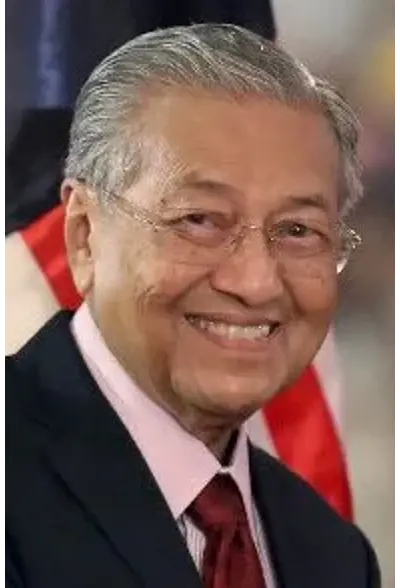
Tun Dr. Mahathir bin Mohamad is a Malaysian politician, statesman, author and doctor who served as the 4th and 7th Prime Minister of Malaysia from July 1981 to October 2003 and again from May 2018 to March 2020. He served as the 4th Deputy Prime Minister and in many other Cabinet positions before his promotion to the premiership in July 1981. He has served as the Member of Parliament (MP) for Langkawi since May 2018, Kubang Pasu from August 1974 to March 2004 and Kota Setar Selatan from April 1964 to May 1969. His political career has spanned more than 70 years, starting with his participation in protests against non-Malays gaining Malaysian citizenship during the Malayan Union through to forming his own political parties, the Malaysian United Indigenous Party (BERSATU) in September 2016 and the Homeland Fighters' Party (PEJUANG) in August 2020.
