Nathan Bedford Forrest Quotes
We have but one flag, one country; let us stand together. We may differ in color, but not in sentiment.
"General Forrest. His Address to the Colored People Yesterday." Memphis Daily Appeal, 6 July 1875, p. 1.


The phrase “Loyalty to the government is our national creed” was advocated by almost all politicians after the Civil War. There were a few communists of the left and libertarians on the right who would disagree but every president tool this position until the administration of Ronald Reagan who then many politicians claimed that the government was a problem and even an enemy of the people. Loyalty was in their view, not to be given to the Government, but to the ideas and ideals of America (as they saw them.) Since then many politicians would talk of “loyalty to America” but not use the McKinley phrase “loyalty to the government.”


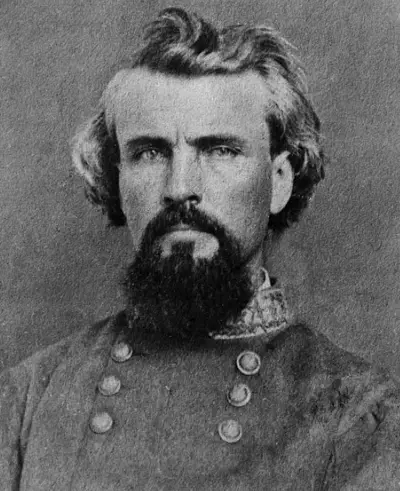
Nathan Bedford Forrest was a prominent Confederate Army general during the American Civil War and the first Grand Wizard of the Ku Klux Klan from 1867 to 1869. Before the war, Forrest amassed substantial wealth as a cotton plantation owner, horse and cattle trader, real estate broker, and slave trader. In June 1861, he enlisted in the Confederate Army and became one of the few soldiers during the war to enlist as a private and be promoted to general without any prior military training. An expert cavalry leader, Forrest was given command of a corps and established new doctrines for mobile forces, earning the nickname "The Wizard of the Saddle". His methods influenced future generations of military strategists, although the Confederate high command is seen by some commentators to have underappreciated his talents. Although scholars generally acknowledge Forrest's skills and acumen as a cavalry leader and military strategist, he has remained a controversial figure in Southern racial history for his main role in the massacre of several hundred Union soldiers at Fort Pillow, a majority of them black, coupled with his role following the war as a leader of the Klan.
