Junot Diaz Quotes
We have a whole bunch of young people and a whole bunch of families. Are we going to disrupt these families and tear them apart? Or are we going think, like, listen - these people are here. We've got to deal with this reality. We've got to extend the franchise.
Díaz, Junot. Interview by Bill Moyers. Moyers & Company, 28 Feb. 2014.

Similar formal opposition to Jewish parochial schools was more formally voiced later—see American Council for Judaism.


Before the French Revolution, Jews could freely practice their own religion in France but they could not hold citizenship, become professionals, or a host of other privileges of citizenship. Clermont-Tonnerre and other liberals argued that Jews should be given citizenship. The Jacobins--conservative Catholics close to the Papacy--opposed granting citizenship to Jews or Protestants. One argument that the Jacobins gave was that each of these sects would be separate nations within France and not necessarily have French national interest as a priority. Clermont-Tonnerre gave this response which has been the French philosophy about minority citizenship since then. Their thought was that anyone may become a French citizen as an individual but he or she should do so because he/she wants to accept French values and support the French nation. This view worked quite will over the years until the large immigration of Muslims starting in the 1960s where many new immigrants just wanted to live in France and earn a living there, but did not want to identify with French national aspirations or adopt French culture or values. America, had no such demands and those immigrants who tended to identify primarily with their country or culture of origin and not assimilate were allowed to do so, but the American way of life was so attractive that many immigrants did adopt it and even if they did not, their children almost inevitably did. That has not happened in France.


Unlike the United States where there is great toleration for immigrants to retain their old language and culture, there is an expectation in Germany, France and much of the rest of Europe that immigrants when they come to Germany will act like Germans, dress like Germans, speak German, and follow German social customs.

This is the origin of the “melting pot” term. Although British, Zangwill wrote this play for America and it was first produced in Washinton DC with Theodore Roosevelt in attendance. The theme was just the concept that most Americans think of relative to the large immigration of so many peoples to America.


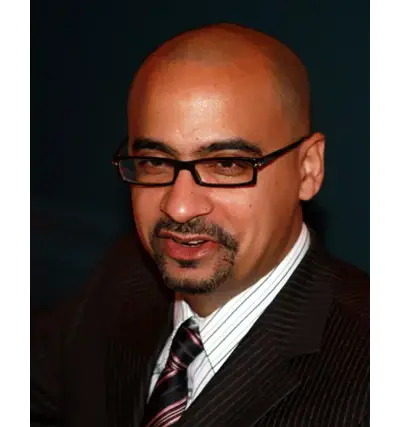
Junot Díaz is a Dominican-American writer, creative writing professor at the Massachusetts Institute of Technology (MIT), and fiction editor at Boston Review. He also serves on the board of advisers for Freedom University, a volunteer organization in Georgia that provides post-secondary instruction to undocumented immigrants. Central to Díaz's work is the immigrant experience, particularly the Latino immigrant experience.
