Max Boot Quotes
We have a long, ugly history of white supremacy in this country, ranging from Jim Crow laws to keep African Americans down to the 1924 Immigration Act to keep non-Europeans out.
Boot, Max. "America's long, ugly history of white supremacy." The Washington Post, WP Company, 2019.


Wilson is perhaps the only President in American history who actually presided over a reverse affirmative action. Other post Reconstruction presidents have either increased the degree of affirmative action in Federal positions or ignored affirmative action and did not pursue it. But only Wilson rolled it back.


Incredible as it seems today, no Black person had ever dined in the White House as a guest of the President. African American servants were common. And Abraham Lincoln had received many Black visitors as had Presidents after him. But no president had ever had a Black person to dine as a social equal. The photo, reproduced here, illustrates the parity. But that was the worst thing a President could do so far as Tillman and his fellow racists were concerned. They had, since the end of the Civil war, used violence and terrorism to murder, maim and/or intimidate the Negro population to remain in an economic and socially inferior position. In Tillman’s state over these decades they had more lynchings than legal executions and there were plenty of them. Newspapers over the South riled up the whites and there was a wave of terror to be sure that the President’s importune action would not be taken as an endorsement of the Negro’s right to any equality or even dignity. This dinner essentially wedded all the Blacks to the Republican Party and all the Southern Whites to the Democratic Party. This would remain the political situation for over 60 years until the Democrats passed the LBJ Civil Rights Act in 1964 and the Republicans decided to solicit the Southern White racists who accepted the invitation and within a few years, there was a complete reversal of party loyalty of most Blacks and most Southern White Racists.

This classic quotation illustrates several things. First, the degree of racism that existed in 1944 in West Virginia. Second, not how young Robert Byrd immediately leaped from the possibility of integrating our fighting forces to interracial sex. That has been typical of white racism in America—a preoccupation with race and sex. Last, Byrd who became a member of the KKK, completely changed his mind over the year and ended up supporting the things that, as a youth were worse than the demise of the nation. He matured and grew on the race issue as much of the country did and ended as a strong supporter of equality and civil rights—including affirmative action.


The president was commenting on a Donald Trump campaign statement that African American were in the worst shape in history when the reality was just the opposite

Preclearance was a requirement that any change in the voting or registration laws, rules or procedures needed to be approved by the Federal Justice Department. He was testifying about why preclearance was important and why it was placed in the Voting Rights Act every time it was reauthorized. See {635271} for what happens without preclearance.


It was indeed the first government that was ever founded on that fallacious principle. In retrospect, it was amazing that more Southerners did not question why no other government in the history of the world based a society on that principle. The Southern hubris was a great failing for them.

This quote illustrates the Southern segregationist view in the Jim Crow South.


The all white regular Mississippi Delegation was selected in elections where Blacks were barred from voting although Blacks were in the majority in Mississippi. In addition, the regular party was advocating obstructing the Supreme Court school integration decisions and the Civil Rights Act that had just been passed. See {637616}. The insurgent group was selected in integrated elections, contained black and white delegates, and was pledged to support and obey the laws. The President could not make the decision unilaterally, but had a great deal of influence.


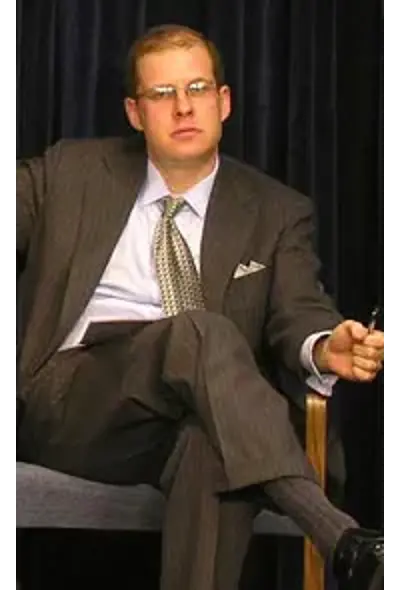
Max A. Boot is a Russian-American author, consultant, editorialist, lecturer, and military historian. He worked as a writer and editor for Christian Science Monitor and then for The Wall Street Journal in the 1990s. He is now Jeane J. Kirkpatrick Senior Fellow in National Security Studies at the Council on Foreign Relations and a contributor to The Washington Post. He has written for numerous publications such as The Weekly Standard, the Los Angeles Times, and The New York Times, and he has also authored books of military history. In 2018, Boot published The Road Not Taken, a biography of Edward Lansdale, and The Corrosion of Conservatism: Why I Left the Right, which details Boot's "ideological journey from a 'movement' conservative to a man without a party" in the aftermath of the 2016 presidential election.
