Dutch West India Company Quotes
we find by experience, that without the common help, assistance, and interposition of a General Company, the people designed from hence for those parts cannot be profitably protected and maintained in their great risque from pirates, extortion and otherwise, which will happen in so very long a voyage.
Dutch West India Company, Charter of Privileges and Exemptions June 7, 1629
Sourced by: Eigen's Political and Historical Quotations


Most Americans do not realize that our naval forces were disbanded after the Revolution and even the Constitution did not require a navy. We had some Federal revenue cutters to interdict smugglers but no warships and no permanent sailors or officers. The Barbary Pirates had an incredible extortion racket going in the Mediterranean. If nations would pay them an annual sum each year, they would not attack and seize merchant ships of that country and sell the ships and goods while holding the sailors for ransom. See {640850},86703,{640846} & {640848}
He was referring to attacking the Barbary States. The Barbary Pirates had an incredible extortion racket going in the Mediterranean. If nations would pay them an annual sum each year, they would not attack and seize merchant ships of that country and sell the ships and goods while holding the sailors for ransom. See {640846}.

He was referring to the Algerian Barbary Pirates who had an incredible extortion racket going in the Mediterranean. If nations would pay them an annual sum each year, they would not attack and seize merchant ships of that country and sell the ships and goods while holding the sailors for ransom. Ames was well known for his hyperbole and fear of all the worst possible consequences. He was in many ways like some of the Tea Party of the 21st century who saw immigrants taking over the country and Muslim terrorists in attack on the United States. The Algerians did not have the inclination, skill, or shipbuilding skill to handle trans-Atlantic travel.


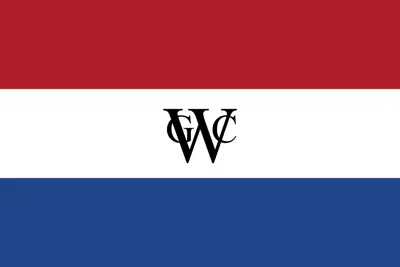
The Dutch West India Company (Dutch: Geoctrooieerde Westindische Compagnie, or GWC; Dutch pronunciation: [ɣəʔɔktroːˈjeːrdə ʋɛstˈɪndisə kɔmpɑˈɲi]; English: Chartered West India Company) was a chartered company of Dutch merchants as well as foreign investors. Among its founders was Willem Usselincx (1567–1647) and Jessé de Forest and the Americas, which included the Pacific Ocean and the eastern part of New Guinea. The intended purpose of the charter was to eliminate competition, particularly Spanish or Portuguese, between the various trading posts established by the merchants. The company became instrumental in the largely ephemeral Dutch colonization of the Americas (including New Netherland) in the seventeenth century. From 1624 to 1654, in the context of the Dutch-Portuguese War, the GWC held Portuguese territory in northeast Brazil, but they were ousted from Dutch Brazil following fierce resistance.
