Alexander Haig Quotes
We didn't do anything wrong, but among the lessons learned, given the magnitude of the problems we now face in Afghanistan, a major U.S. force on the ground would convince the world we were in for the long-haul recovery of a country devastated by 21 years of warfare.
Haig, Alexander. Interview on the Middle East. Newsmax, 2002.


His view, that America had no vested interest in Rwanda, was the prevailing thinking of the Republicans who controlled Congress and many of the Democrats as well. President Clinton considered intervention in Rwanda, but decided against it given all the opposition and little time to educate the American public to a different position. The result was the genocide in Rwanda where over 500,000 Tutsis were exterminated by the Hutus. Clinton, several years later not only admitted that he made a political and moral mistake, but officially apologized to Rwandan Tutsis who remained alive. He had intervened very successfully in Kosovo to prevent more murder of ethnic Muslims and was given a hard time politically by his opposition even though the brilliant effort cost no American lives. The United States and the UN, all bearing guilt for doing little in Rwanda, did help to set up the mechanism for the trials of the worst murderers and at least many of the most guilty were brought to justice.

The Vice President was one of the architects of and advocates for the Iraq War. To garner public support he (and the others supporting the war) claimed that Iraq had developed weapons of mass destruction and made a serious of predictions about the war. He was wrong on all counts. There were no WMDs, none were even being developed, and we needed hundreds of thousands of troops for a decade as we were not greeted as liberators but the vast majority of our casualties and deaths in Iraq came after the invasion was successful and the population showed very hostile to U. S. occupation and our governing policies.


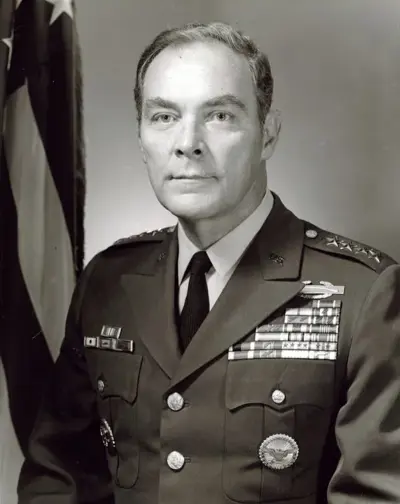
Alexander Meigs Haig Jr. was the United States Secretary of State under President Ronald Reagan and the White House chief of staff under presidents Richard Nixon and Gerald Ford. Prior to these cabinet-level positions, he retired as a general from the United States Army, having been Supreme Allied Commander Europe after serving as the vice chief of staff of the Army.
