Chief Joseph Quotes
We did not know there were other people besides the Indian until about one hundred winters ago, when some men with white faces came to our country.
Joseph, Chief. "An Indian's View of Indian Affairs." The North American Review, vol. 128, no. 269, University of Northern Iowa, Apr. 1879, p. 413.


Commenting in the Senate in 1952 on the use of the cross in Dwight Eisenhower's anti-Communist "crusade" that resulted in the words "under God" inserted in the Pledge of Allegiance:

In early America large numbers of whites who had been captured by Indians would refuse to leave their new families even when they had the opportunity to do so. J. Hector St. John


This quotation is often used as the greatest evidence the white usurpation of Indian land and the dubious value of all the treaties that had been made with the Indians guaranteeing them specific lands. Jackson, however, was not completely accurate. The Iroquois who fought on the American side in the Revolution were still on their lands in New York State. However, the Iriquois had their dealings with the State and local governments, and fared better than those tribes that depended in the Federal Government—especially with racists like Jackson in the Presidency.
Gustav II Adolph. The colony would also exclude slavery, and to make a home for the oppressed of all Christendom. Essentially this was the first plan for multicultural diversification of American immigration. The 30 Years War put the project on hold until after the king’s death and it was not until 1638 that Swedish ships sailed for what they called “New Sweden” landing at Wilmington, Delaware, calling it Christina.


He had done an analysis of American History textbooks and found that 9 pages about American Indians and their history before and after Europeans came to America. He and most other historians consider that to be inadequate.
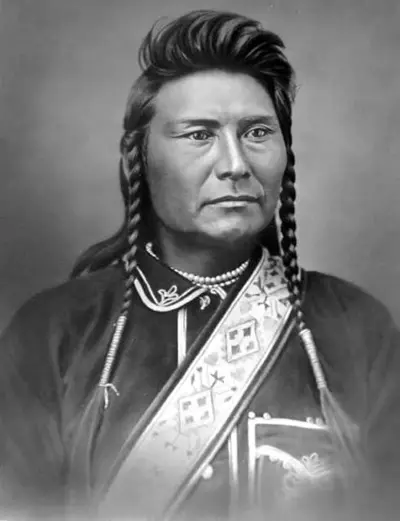
Hin-mah-too-yah-lat-kekt (or Hinmatóowyalahtq̓it in Americanist orthography), popularly known as Chief Joseph, Young Joseph, or Joseph the Younger, was a leader of the Wal-lam-wat-kain (Wallowa) band of Nez Perce, a Native American tribe of the interior Pacific Northwest region of the United States, in the latter half of the 19th century. He succeeded his father Tuekakas (Chief Joseph the Elder) in the early 1870s.
