William Lyon Mackenzie Quotes
We contend that in all laws made, or to be made, every person shall be bound alike—neither should any tenure, estate, charter, degree, birth or place, confer any exemption from the ordinary course of legal proceedings and responsibilities whereunto others are subjected.
William Lyon Mackenzie, 1795-1861, Canadian Newspaper Publisher and Revolutionary, Printed call to arms in the Rebellion of Upper Canada, December 1837
Sourced by: Eigen's Political and Historical Quotations


One of the earliest codes of equality before the law for both rich and poor.


The power structure of England and the English administrators of South Africa were strong advocates of racial equality at the beginning of the 19th century. They insisted on equal administration of law. However the Boer white population could think of nothing more absurd. In a sense the Boers were much like the Southern Whites at the same time. The South African government however could not enforce its equality policies in the rural area – the majority of South Africa at the time. When democracy and self rule came to South Africa, the racially moderating force of the English was minimized and the majority of South Africans wanted a racially segregated society. Apartheid resulted.

Katyl had represented Salim Ahmed Hamdan, a Yemeni suspected Islamic terrorist being held at Guantanamo who sued the Government over his detention without trial or due process and the Bush Administration’s Military Commissions. In Hamdan v. Rumsfeld, the Supreme Court ruled that the Government was violating Hamdan’s rights.


This ruling upheld a military draft for males only. The logic was that men and women were dissimilar persons.


He was trying to calm many Americans who were upset that a young Black man who was accused of a minor misdemeanor of selling loose cigarettes (not whole packs) was being arrested by 5 white New York City police officers who thought that he was not cooperating forced him to the ground with one using a “choke hold” that was against Police Department regulations. The video, taken by a citizen, showed the arrested man crying to the police several times that he could not breathe when the pressure was placed by the officer with the choke hold. He man was choked to death. The coroner declared the death a homicide. However, the Staten Island district attorney presented the case to the Grand Jury in such a way that the jury found no reason to indict any of the police officers for any crime. Staten Island is a borough of New York far smaller and more suburban than the rest of New York System and more than half of all the white New York City police officers lived in the only conservative borough of New York where they were a major political force in the election of the borough district attorney. The President told the public that the Justice Department would investigate the case to determine if the victim’s civil rights had been violated.


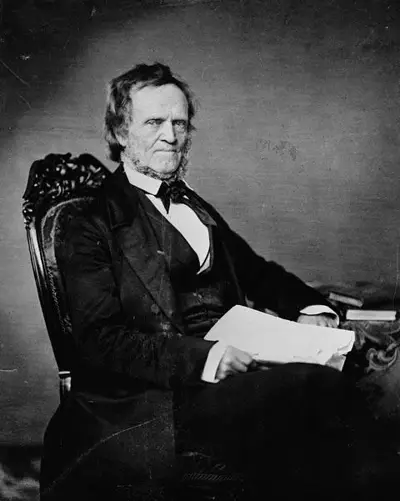
William Lyon Mackenzie was a Scottish-born Canadian-American journalist and politician. He grew up in Dundee, Scotland, and emigrated to York, Upper Canada, (later known as Toronto) in 1820. He published his first newspaper in 1824 called Colonial Advocate and wrote articles that supported the policy proposals of the Upper Canadian political Reform movement. In 1827 he was elected as a York County representative to the Legislative Assembly of Upper Canada. He investigated corruption by Tory politicians (who were the political opponents of the Reform movement) and other elite members of Upper Canada, which he called the Family Compact. He brought grievances from Upper Canada citizens to the Colonial Office in London, England, causing the colonial secretary to propose reforms in the colony. In 1834, York became the city of Toronto and Mackenzie was elected by the city council to be its first mayor, but he was not reelected the following year.
