William Smyth Quotes
We contend against reason, philosophy, and nature itself; forget the great rule of doing to others as we would they should do unto us ; and after wasting our blood and treasure to no purpose, we at last sit down faint and exhausted, abandon our vain projects only because it is impossible to pursue them, and then leave it to the reasoners of a succeeding age to show how egregious has been our folly, and how blind our fury.
William Smyth, 1765-1849, English Historian, Modern History: Volume II
Sourced by: Eigen's Political and Historical Quotations

There are two general kinds of human action against their own interest. In the first find, citizens place the nation or the good of the community above their own personal advantage. Every soldier who voluntarily fights is engaging in this type of altruistic behavior. The other is where politicians, democratically elected or imposed offend people in some way. In a democracy people will vote against candidates whose policies are better for the individual, but he is offended by their corruption, immorality, racism, sexism or the like. Richard Nixon was turned on by the vast majority of Americans despite the fact that he presided over national affluence, and had by almost any standard made great breakthroughs in foreign policy. Another example is most of the Arab nations whose citizens support leaders who can and will not improve their standard of living but makes them feel good because they maintain Islamic dignity be opposing the West, even when the opposition itself makes development and growth much more difficult.


The notion that government had to be structured and limited was then utilized a century later in the American Constitution and Bill of Rights. Spinoza was one of the most feared intellectuals in human history—feared that is by the established power structures. He is the only known person who was excommunicated by the Catholics, the Jews and the Muslims—all were forbidden to read his works. He was the enemy of authority and advocated personal reason as the guide for men.

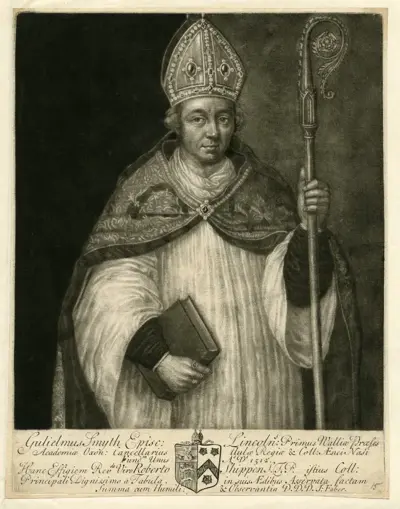
William Smyth (or Smith) was Bishop of Coventry and Lichfield from 1493 to 1496 and then Bishop of Lincoln until his death. He held political offices, the most important being Lord President of the Council of Wales and the Marches. He became very wealthy and was a benefactor of a number of institutions. He was a co-founder of Brasenose College, Oxford and endowed a grammar school in the village of his birth in Lancashire.
