David Hume Quotes
Men often act knowingly against their interest
There are two general kinds of human action against their own interest. In the first find, citizens place the nation or the good of the community above their own personal advantage. Every soldier who voluntarily fights is engaging in this type of altruistic behavior. The other is where politicians, democratically elected or imposed offend people in some way. In a democracy people will vote against candidates whose policies are better for the individual, but he is offended by their corruption, immorality, racism, sexism or the like. Richard Nixon was turned on by the vast majority of Americans despite the fact that he presided over national affluence, and had by almost any standard made great breakthroughs in foreign policy. Another example is most of the Arab nations whose citizens support leaders who can and will not improve their standard of living but makes them feel good because they maintain Islamic dignity be opposing the West, even when the opposition itself makes development and growth much more difficult.
David Hume, 1711-1776, Scottish Philosopher & Historian, The philosophical works of David Hume: Including all the essays, and exhibiting the more important alterations and corrections in the successive editions published by the author
Sourced by: Eigen's Political and Historical Quotations


This is a common phenomenon in most democracies. There are 3 reasons that people vote against their interests. One is that they are fooled by the slickness of particular candidate and/or promises and assurances. Second, their cultural values are offended by the candidate who advocates and will fight for their interests. Third, they have been frightened sufficiently that they will sacrifice their interests if that will protect them. One frequent example is that in America in all wars, many people have voted for the candidate or party who would erode and/or deny their civil rights in the name of national security.


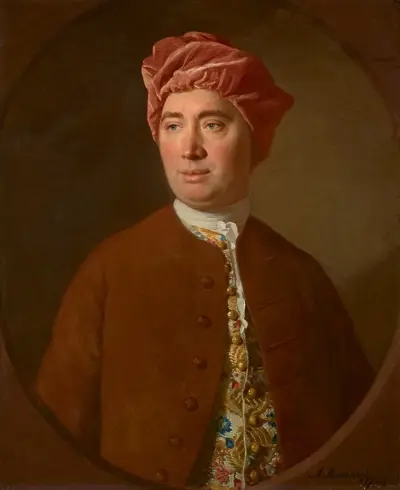
David Hume, Hume strove to create a naturalistic science of man that examined the psychological basis of human nature. Hume argued against the existence of innate ideas, positing that all human knowledge derives solely from experience. This places him with Francis Bacon, Thomas Hobbes, John Locke, and George Berkeley as a British Empiricist.
