James Bovard Quotes
We can’t trust government to limit its powers to the Constitution.
James Bovard, Policy Analyst, Political Writer and Essayist, Speech, Freedom Fest, Las Vegas, May 13, 2004
Sourced by: Eigen's Political and Historical Quotations


This is a classic type of fallacious political logic. The author claims that there are no powers in the constitution to make laws in a number of important areas of our society. What is true, is that there is no explicitly and uniquely specified statements in the Constitution regarding the areas he specified (and some he didn’t like education). However the power to make laws in these areas comes from the “Commerce Clause” where the Federal Government was given the power to regulate Interstate Commerce. And that is what the Federal Government does make laws about. Food that is sold in the state where it is grown is regulated by the states. But interstate agriculture is. Medicines and weapons are also sold and transported in interstate commerce. Even housing is in part covered as financing and mortgages, building materials, working conditions of the building companies are part of Interstate Commerce. A succession of Congresses have recognized this and so has every Supreme Court in our history. McManus however believes that all these legislators and judges have been wrong and worse, part of a conspiracy to subvert the Constitution. See {630683} for his tendency to see conspiracies in politics.

In a 1949 dissenting opinion in Terminiello v. Chicago Jackson claimed the majority view would “convert the Bill of Rights into a suicide pact.”


This view causes great problems for Republicans and Tea Party members in that they share this and a few other particular views with the race haters like Lane. Many tend to conflate the viewpoints—especially when KKK and Aryan Nation members show up at Tea Party Rallies. Also, the extreme hyperbolic rhetoric. Someone who disagrees supports “tyranny” and is not a fellow citizen.


One of the conundrums of our constitutional system is who has the last word as to what the Constitution means. Essentially it is the judicial branch headed by the Supreme Court. But there are those who believe that the current popular majority should have a say in what is or is not constitutional. If so the legislative branch should have the last word. Still others say that the President is the only person elected by ALL the people, so his opinion most reflects the will of the public. And then there are most who argue that the Constitutional system was created just to avoid the power of currently popular majorities, and the courts should decide based on the Constitution itself. So the statement has very little meaning except that Phillips thinks that the courts have too much power. Whoever gets to decide what is or is not Constitutional will be accused of being “over” the Constitution by those who don’t like the decisions. In our system, that is the courts.

The English Constitution is not as binding on the English government as is the Amercan Constitution. In the English system, the government in power can override the constitution although the rarely do so out of respect for the system. In America, the Constitution is much more controlling and hence would be seen to count for more. In many third world countries, the ruler can “suspend” the constitution in a national emergency.


Powell was the Secretary of State and Addington kept advising the administration that as long as the President was acting in defense of the country in his capacity as Commander in Chief, he did not have to obey any existing laws that had been Constitutionally passed which in the opinion of the President restricted or limited the President or the executive branch. Addington was an attorney and Assistant to the Vice President, but he was given much responsibility for administration policy. Powell the Secretary of State of the Administration could not have disagreed more and although most politicians including Republicans disagreed with the Addington thesis, Powell was one of the few Republicans to criticize the Addington position.
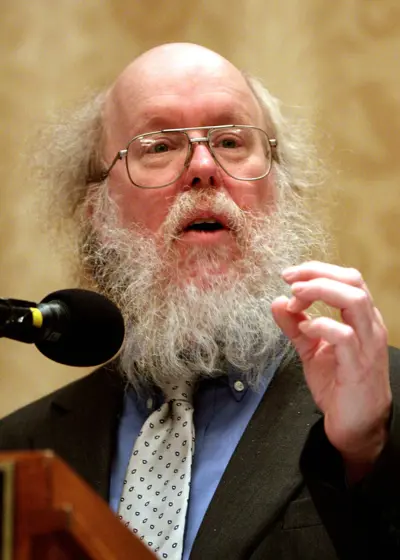
James Bovard (/bəˈvɑːrd/; born 1956) is an American libertarian author and lecturer whose political commentary targets examples of waste, failures, corruption, cronyism and abuses of power in government. He is a USA Today columnist and is a frequent contributor to The Hill. He is the author of Attention Deficit Democracy and nine other books. He has written for the New York Times, Wall Street Journal, Washington Post, New Republic, Reader's Digest, The American Conservative, and many other publications. His books have been translated into Spanish, Arabic, Japanese, and Korean.
