William Faulkner Quotes
We cannot choose freedom established on a hierarchy of degrees of freedom, on a caste system of equality like military rank. We must be free not because we claim freedom, but because we practice it.
Faulkner, William. Essays, Speeches & Public Letters. Edited by James B. Meriwether, Random House, 1965.


Sometimes falsely attributed to Jordan B. Peterson (even though he credits Solzhenitsyn).


Essentially this quotation led to a major war and yhrn a later war of independence for Blacks in South Africa. Porter was the Attorney General of the English Cape Colony in South Africa. In an early legal ruling he observed that South Aftica was a colony under English law which did not permit discrimination on the basis of skin color. However, there was a large proportion of Afrikaners—whites of Dutch Ancestry who were culturally strong racists and saw the Blacks as a combination of potential rivals for land and a potential subjegated labor force. They tended to leave the Capetown area and English law. The Afrikaners ended up in a major war—the Boer War—against the English and although the English won the war, the Afrikaners won the political peace and ended up dominating South Africa and imposing apartheid. The Blacks of the mid 20th century had if nothing else, the 100 year old legal and moral precendent from Porter’s opinion which justified the ANC leading the attack on apartheid which finally succeeded. It took 100 years and millions of suffering and dying people but finally, the law of South Africa was as Porter had stated it, and since the Blacks were in the great majority, the Whites became the minority, but due to the ANC leadership of men like Nelson Mandella, the Blacks did not seek revenge on the Afrikaner whites although there was resentlent for generations.


One of the most amazing things about Abraham Lincoln is the way he grew and matured over time. In 1854 he was not sure that the Negro could be the equal of the white. As he met more Black leaders, saw more, reflected more, and had more responsibility, he grew and developed his views on race. But it was statements like this that led to the great distrust that the very strong abolitionists like Wendell Phillips had in him.


Although Holland was more egalitarian and fairer than most nations of Europe, it was not quite as desirable as Diderot described it. He only visited a part of Holland that was the most educated and affluent.

His political view was one of general opposition to Government—especially large Government. However, even the Conservative voters whose nomination he sought did not elect him to any public position. His inherited fortune allowed him to run for office and campaign.


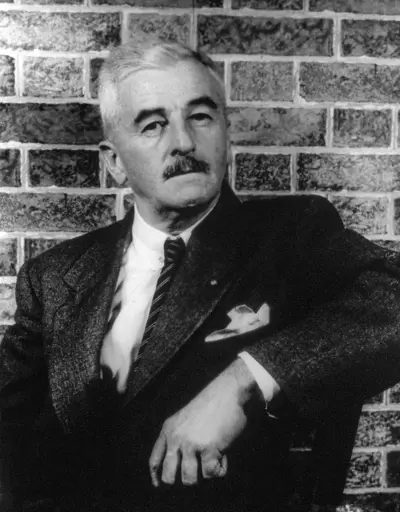
William Cuthbert Faulkner was an American writer and Nobel Prize laureate from Oxford, Mississippi. Faulkner wrote novels, short stories, screenplays, poetry, essays, and a play. He is primarily known for his novels and short stories set in the fictional Yoknapatawpha County, based on Lafayette County, Mississippi, where he spent most of his life.
