Benjamin Franklin Fairless Quotes
We believe that there is one economic lesson which our twentieth century experience has demonstrated conclusively-that America can no more survive and grow without big business than it can survive and grow without small business.... the two are interdependent. You cannot strengthen one by weakening the other, and you cannot add to the stature of a dwarf by cutting off the legs of a giant.
Fairless, Benjamin F. "Detour Ahead." Vital Speeches of the Day, vol. 16, no. 15, 15 May 1950, p. 466.


Here, an officer of a large corporation (Pittsburgh Plate Glass) makes the classic argument of large corporations about the anti-trust laws which prevent them from using their economic power to crush competition. The claim that the large corporations are at a disadvantage and handicapped in competing with small companies is easily refuted by the bankruptcy rate of small businesses which is large, and that of large corporations which is very small, and that of major monopolies which is virtually zero.


One important observation of this quotation is the pejorative language Mises used to describe “Union Bosses” as opposed to “Union Leaders.” There were indeed a few Union “Bosses” but most unions had popularly elected leaders. It is similar to the left wing critic who refers to Corporate Executives as “Greedy Monopolists.” A few are but most are not. Historically, in the last half of the 20th century and the beginning of the 21st, the conservatives tended to be much better at pejorative language and used it more frequently and uniformly than the liberals who tended to be better in the last part of the 19th century and the first half of the 20th century.


She was citing a study done by the Kauffman Foundation.

The principle holds for politics also. The largest social problems the politician faces are the greatest opportunity for him/her to create a program to solve or ameliorate the problem.

He was opposing the view of President Donald Trump that the United States needs trade protectionism in order to preserve and grow manufacturing jobs. Flake and the majority of the Contgress maintained that protectionism at best would lose more jobs and growth possiblities than it would save, and at worst could start a trade war that throws teh United States into a recession or even a depression.


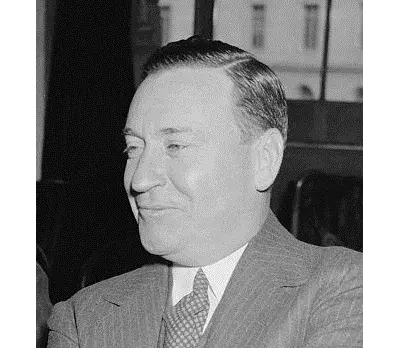
Benjamin Franklin Fairless was an American steel company executive. He was president of a wide range of steel companies during a turbulent and formative period in the American steel industry. His roles included President of Central Alloy Steel from 1928 to 1930; First Vice President of Republic Steel (which had absorbed Central Steel) from 1930 to 1935; President of the Carnegie-Illinois Steel Company from 1935 to 1938; and then President (1938–1955), and later Chief Executive Officer and Chairman of the board of directors (1952–1955) of U.S. Steel, the largest steel corporation in the United States.
