Philip Stanhope, 4th Earl of Chesterfield Quotes
We are really so prejudiced by our educations, that, as the ancients deified their heroes, we deify their madmen.
Stanhope, Philip Dormer. Letters Written by the Late Right Honourable Philip Dormer Stanhope, Earl of Chesterfield, to His Son, Philip Stanhope, Esq. Vol. 2, J. Dodsley, 1774, p. 240.

This is but one of the quotations of someone who was a major force in perpetuating the old slavery era myth that “Negros” were not only inferior to whites, but they were unable to develop morality or repress their sexual urges. Dr. Howard was generally castigated by his professional colleagues, but he was quite popular with the general public for whom he wrote a number of books and magazine articles.


D. H. Hill. These are very important historical quotations in that they illustrate something that is not well known by most of us. In the decades before the Civil War there was a strong cultural enmity on the part of most Southerners of the Northern countrymen. It was so gross and overt that problems like this in a Southern college Algebra Text were not only published but used un schools throughout the South. Northerners were depicted in many of the Southern Cultural examples as duplicitous, greedy, dishonorable, cowardly, radical, irreligious, and extremist. The North did not have a very favorable view of Southerners who were perceived as uneducated, reactionary, anti-modern, lazy, hypocritical, cruel and backward – much implied by the acceptance of slavery. However the Northerners were not overt about their biases. These kinds of derogatory school problems were not acceptable. However the Northern bias was in some ways worse as it made most Northerners quite condescending when interacting with Southerners. After the Civil War, Southern education, culture, science and industry did not develop at the same pace as the North and the condescension continued well into the 20th century, at the end of which the South began to close the historical gap.


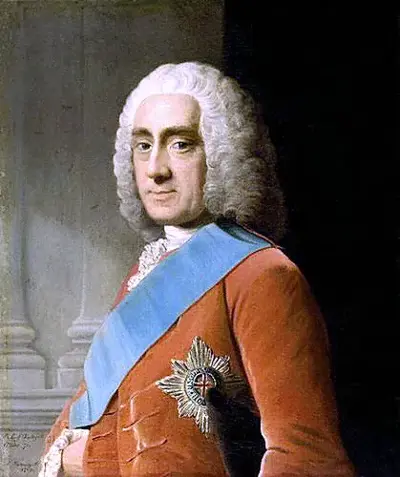
Philip Dormer Stanhope, 4th Earl of Chesterfield, was a British statesman, and a man of letters, and wit. Educated at Trinity Hall, Cambridge, he subsequently embarked on the Grand Tour of the Continent, to complete his education as a nobleman, by exposure to the cultural legacies of Classical antiquity and the Renaissance, and to become acquainted with his aristocratic counterparts and the polite society of Continental Europe.
