John Lubbock Quotes
We are all great landed proprietors, if we only knew it. What we lack is not land, but the power to enjoy it. Moreover, this great inheritance has the additional advantage that it entails no labor, requires no management. The landlord has the trouble, but the landscape belongs to everyone who has eyes to see it.
Lubbock, John. The Beauties of Nature and the Wonders of the World We Live In. Macmillan and Co., 1892, p. 3.

The Diggers were a religious-economic movement that even today would be considered very radical. They advocated the right of the poor to go onto public lands and farm them—thus the name “Diggers.” Beyond their opposition to the private ownership of land to the exclusion of the poor, Winstanley and the Diggers promulgated another very modern doctrine: That the poor should take the responsibility and have the right to determinine how the society should provide for the poor. A version of this became one of the Mottos of the Poverty Program of 1964. See {616966}.


See {638124} for how this Biblical passage evolved into a concept of property ownership

The possession in perpetuity was the result of the Biblical Jubilee. See {638120} for an example of how the Jubilee functioned. Hebrew citizen could NEVER lose his land permanently even if he could not pay his debts. Spinoza was one of the most feared intellectuals in human history—feared that is by the established power structures. He is the only known person who was excommunicated by the Catholics, the Jews and the Muslims—all were forbidden to read his works. He was the enemy of authority and advocated personal reason as the guide for men.
In every society where there had been past unjust ownership of land, all efforts of land reform were faced with the problem of having to dispossess the current “owners” who themselves had not been guilty of the crimes of their ancestors in unjustly obtaining the land originally. In America land reform was unworkable in most cases and the solution was usually a large monetary payment as compensation for the land.


The Romans were very organized regarding land ownership. When they conquered Africa, defeating Carthage, they found no written records of land ownership, no deeds, no bills of sale. Therefore, they opened up the entire land mass of Africa for what amounted to public colonization where the land could be worked and claimed legally. Illiterate Africans had no written records, and most areas where under the control of a strongman who “owned” all of the land with no notion of private ownership of land.

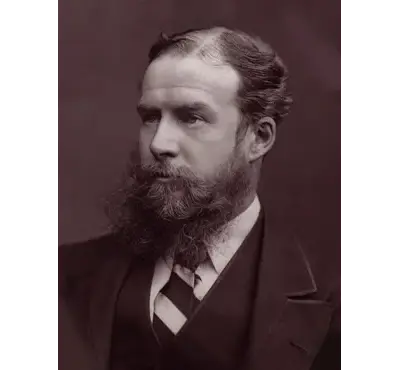
John Lubbock, 1st Baron Avebury, 4th Baronet, PC, DL, FRS, known as Sir John Lubbock, 4th Baronet from 1865 until 1900, was an English banker, Liberal politician, philanthropist, scientist and polymath. Lubbock worked in his family company as a banker but made significant contributions in archaeology, ethnography, and several branches of biology. He coined the terms "Paleolithic" and "Neolithic" to denote the Old and New Stone Ages, respectively. He helped establish archaeology as a scientific discipline, and was also influential in nineteenth-century debates concerning evolutionary theory. He introduced the first law for the protection of the UK's archaeological and architectural heritage. He was also a founding member of the X Club.
