Albert Einstein Quotes
War seems to me to be a mean, contemptible thing: I would rather be hacked in pieces than take part in such an abominable business. And yet so high, in spite of everything, is my opinion of the human race that I believe this bogey would have disappeared long ago, had the sound sense of the nations not been systematically corrupted by commercial and political interests acting through the schools and the Press
Einstein, Albert. Ideas and Opinions. Crown Publishers, 1954, p. 10.


This was the week after he returned from his meeting with Hitler in Munich where he appeased the German Dictator. See {585941} for his famous naive statement.


After a reception given by Lady Astor, Channon wrote in his diary that the “Cliveden Set” {598323} would be criticized because it was in favor of the policy of appeasement. The name came from the seat of Lord and Lady Astor, who were both supporters of the policy. To some the policy was seen as pro-Hitler, but Channon saw it as reasonable and in concert with Neville Chamberlain’s views. Even so, Chamberlain’s policy of appeasement was very controversial. This very policy prevented early Allied involvement in World War II and therefore gave Hitler time to buildup the German military while invading much of Eastern Europe.


Bland was an expert in Asia and spent most of his time writing about Asian Politics. This quote shows that there was hostility and bad feeling between American and Japan long before WWII. This statement was written in 1921. The reality was that Japan was getting stronger as a militaristic expansionist nation which wanted to subjugate most of Asia. Ironically, they were using England and the European powers as models and sought to take Korea, Manchuria and much of Asia as Colonies, but this clashed with American values and even then there was animosity of the two systems.


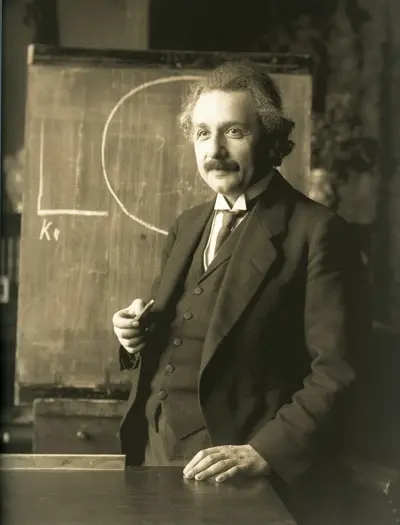
Albert Einstein was a German-born theoretical physicist, widely acknowledged to be one of the greatest physicists of all time. Einstein is known for developing the theory of relativity, but he also made important contributions to the development of the theory of quantum mechanics. Relativity and quantum mechanics are together the two pillars of modern physics. His mass–energy equivalence formula E = mc2, which arises from relativity theory, has been dubbed "the world's most famous equation". His work is also known for its influence on the philosophy of science. He received the 1921 Nobel Prize in Physics "for his services to theoretical physics, and especially for his discovery of the law of the photoelectric effect", a pivotal step in the development of quantum theory. His intellectual achievements and originality resulted in "Einstein" becoming synonymous with "genius".
