William Ellery Channing Quotes
War rests upon opinion.
William Ellery Channing, 1780-1842, Unitarian minister and reformer, Tribute to Worcester in Ware
Sourced by: Eigen's Political and Historical Quotations

14 years after this statesmanlike speech, Davis flip flopped on this principle and became a firebrand and agitator and hawk for secession and war. It was the Southern upper class that controlled the politics of the South and were the ones who would suffer the greatest economic loss if the Union had continued in the direction of refusing to return runaway slaves and other abolitionist activity. Although many Southerners volunteered to fight for the confederacy, there were not enough and Davis, who in earlier years would not war unless there was genuine demand of the people, for the Civil War, the South had to resort to conscription. The North did as well.


King George did not want to give up the American Colonies and claimed the loss at Yorktown was just a loss of a single battle. The English soldiers had controlled New York, Charlestown and other places and American Tories wanted to fighting to continue. The French were having major problems elsewhere and the states were all broke from the war effort. Hamilton urged Clinton to offer all the New York offers and soldiers half pay tp be available to fight against the other ex-colonies represented in the Continental Congress.


He himself became a victim of the Civil War when Oliver Cromwell ordered him beheaded in 1658

The line was delivered by Dustin Hoffman.

At the time of this speech virtually the entire world believed that. However world attitude changed markedly after the administration of George W. Bush and the United States invasion of Afghanistan after September 11 and the Iraq War which was for regime change.


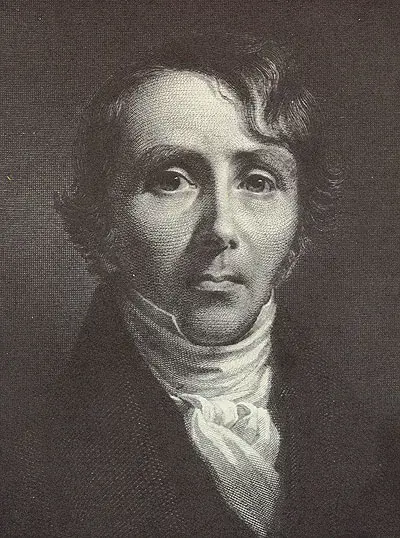
William Ellery Channing was the foremost Unitarian preacher in the United States in the early nineteenth century and, along with Andrews Norton (1786–1853), one of Unitarianism's leading theologians. Channing was known for his articulate and impassioned sermons and public speeches, and as a prominent thinker in the liberal theology of the day. His religion and thought were among the chief influences on the New England Transcendentalists although he never countenanced their views, which he saw as extreme. He espoused, especially in his "Baltimore Sermon" of May 5, 1819, given at the ordination of the theologian and educator Jared Sparks (1789–1866) as the first minister of the newly organized First Independent Church of Baltimore, the principles and tenets of the developing philosophy and theology of Unitarianism, leading to the organization in 1825 of the first Unitarian denomination in America (American Unitarian Association) and the later developments and mergers between Unitarians and Universalists, resulting finally in the Unitarian Universalist Association of America in 1961.
