Vladimir Lenin Quotes
War is coming. That’s inevitable. The capitalist world has reached a state of putrid ferment, and people are already affected by the poison of chauvinism and nationalism. I think we shall yet witness an all-European war. The proletariat? I hardly think the proletariat will find the strength to prevent a blood-bath…The proletariat will suffer terribly, of course, such, alas, is its fate for the time being. But its enemies will enfeeble one another; that, too, is inevitable.
Vladimir Lenin
Nikolai Lenin, 1870-1924, Russian Communist Premier, Statement to Maxim Gorky, Quoted in Gorky’s Eulogy for Lenin
Sourced by: Eigen's Political and Historical Quotations

Vladimir Lenin


Although the Nazis railed against the Communists & Socialists, the potential opposition they feared the most was the middle class. See also {582966}.


See the American ambassador’s assessment after the war began {41089}


This was the basic document issued after the Russian Revolution establishing the basic legal and economic structure of the new Soviet State.


Just before the outbreak of hostilities of WWI. The German Social Democratic Party was a minority party in Germany and the majority was very anxious to go to war.


This is an example of what made the Cold War so difficult. The Italian Communists had great misgivings about the Russian version of Communism that tended to abuse human rights and try and control other countries. However, when the Russian Communists were under world attacks by the West, as with their incursion into Hungary, he urged that all the Communists stick together and defend the Russians even for policies that they thought wrong. On the West side, the same thing occurred. The United States tolerated and supported a number of terribly oppressive dictatorships that were virulently anti-Communist. Polarization was the international norm.


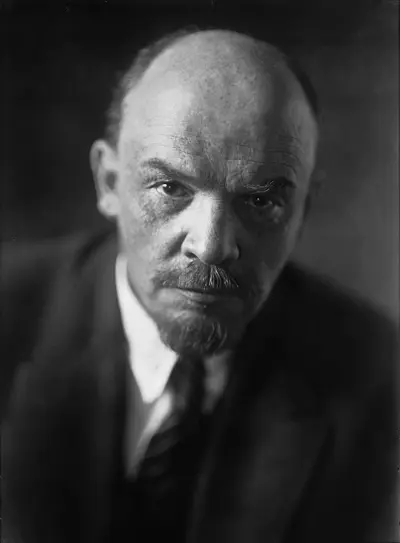
Vladimir Ilyich Ulyanov, better known by his alias Lenin, was a Russian revolutionary, politician, and political theorist. He served as the first and founding head of government of Soviet Russia from 1917 to 1924 and of the Soviet Union from 1922 to 1924. Under his administration, Russia, and later the Soviet Union, became a one-party socialist state governed by the Soviet Communist Party. A Marxist, he developed a variant of this communist ideology known as Leninism.
