William Faulkner Quotes
War is an episode, a crisis, a fever the purpose of which is to rid the body of fever. So the purpose of a war is to end the war.
Faulkner, William. A Fable. Random House, 1954, p. 326.


1st Earl of Beaconsfield. Contrast this statement with that of Neville Chamberlain returning from Munich in 1941. Disraeli had threatened war and forced the Russians to accept all the British demands by diplomatically isolating them first and moving armed troops into position just before the peace conference.

Lee was trying to negotiate a peace treaty as a part of his his potential surrender. However, Grant would not be drawn into that, Lee was NOT the government of the Confederacy, and Grant had served with him earlier in the Mexican War and knew he was not a fanatic on teh subject of slavery and race as most of the Southern leaders were. They werenthe ones who would have to be captured or driven to surrender. Grant could have gotten authoirioty as he was in almost real time contact with President Lincoln by telegraph. However, neither wanted to negotiate peace with Lee. Instead, Grant gave Lee and his men incredibly gracious termsof surrender which he and Lincoln hoped would casue the avarage Southern soldiers to feel better about surrender for although Lee's was the largest Confederate Army, there were still others out there that had to be dealt with,


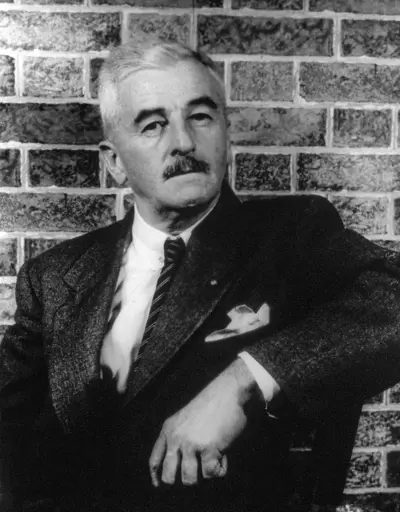
William Cuthbert Faulkner was an American writer and Nobel Prize laureate from Oxford, Mississippi. Faulkner wrote novels, short stories, screenplays, poetry, essays, and a play. He is primarily known for his novels and short stories set in the fictional Yoknapatawpha County, based on Lafayette County, Mississippi, where he spent most of his life.
