Sean Francis Lemass Quotes
Until we get a definite national policy decided on in favor of industrial and agricultural protection, and an executive in office prepared to enforce that policy, it is useless to hope for results.
Sean Francis Lemass, 1899-1971, Prime Minister of Ireland, Irish Minister of Trade and Commerce, Quoted in Ronan Fanning, The Irish Department of Finance
Sourced by: Eigen's Political and Historical Quotations


Britain, in order to protect the landed gentry and aristocracy who made their money via agriculture, long had the Corn Laws (Corn was the term for wheat.) which was a protectionist system making it virtually to import food grains, rice or potatoes into Britain. However, with the growth of the population and a protected agricultural industry that had no drive to be more productive there was not quite enough food in the kingdom. When there was a potato blight in Ireland, the situation reached critical proportions. Victoria was not generally in favor of protectionism, and given the shortage and high cost of food then, she wanted to allow food imports. Robert Peel presided over a government where the protectionists who represented the large landowners had a very strong block. Pushing for an end to the Corn Laws could have caused the government to collapse. Peel himself did not think the Corn Laws were good policy and created a hardship for most people especially the poor. But he was the leader of his party and the party was split on the Corn Law issue. Victoria, in this private letter, tells him to do what he things is right and not what is politically expedient. Peel tried but at this time could not get a majority to repeal the Corn Laws, and the Irish Potato Famine killed millions. See {630738} . Peel however stuck with the Queen’s and his perception of what was right. The following year he proposed the Importation Act 1846 which repealed the Corn Laws. Many of his own party would not support it, but this time, he went to the two opposition parties and created a slim majority which passed the bill much to the approval of the Queen.


During Theodore Roosevelt's administration there was a movement for tariff reform. The Speaker advised against any change, and the President finally accepted his view:


It is interesting that the first national women’s political party was a strong advocate of protectionism and saw free trade as an unfair hurdle for mostly male workers. At the time, the Republicans were staunch protectionists, and the Democrats, the free traders thus illustrating that the major parties continuously flip-flop on major issues.

Justifying high protective tariffs that would maintain high consumer prices:

The issue of free trade verses protectionism has been with us throughout American history with national sentiments going one way and then later the other, only to come back and the cycle has gone on. Floyd was very modern in his economic views, so much so that he, even as a Southern politician, opposed slavery on the grounds that it was economically inefficient and the South would never develop industrially if it had no incentive, as existed in the North and England, to reduce the amount of labor required for economic opportunity. He was right on that point as well.

Earlier, Jefferson was opposed to manufacturing in America as factories were a social blight in Europe which he wanted to keep out of the United States. He felt that we could import whatever we needed from Europe and not have the evils of industrialization. However, with the War of 1812, the Barbary Pirates and his mellowing when no longer President, and his willingness to change his positions as he learned more, he issued this letter. See another the following year: {615634}. His was considered such an important change of position—today we would accuse him of a flip flop— that other journals and periodicals reprinted the letter and commented upon his change. Despite his changed position, most Americans believe that Jefferson was opposed to manufacturing and industrialization for his entire life—not just the first part.


The issue of free trade has been controversial during the entire history of our Republic. At the time it was the Republicans who were the protectionists and the Democrats, the free traders.


1st Earl of Beaconsfield
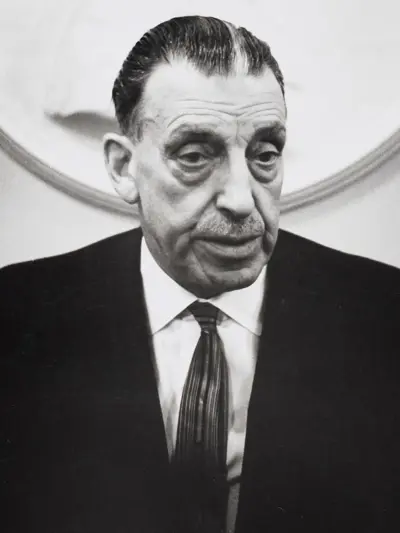
Seán Francis Lemass was an Irish Fianna Fáil politician who served as Taoiseach and Leader of Fianna Fáil from 1959 to 1966. He also served as Tánaiste from 1957 to 1959, 1951 to 1954 and 1945 to 1948, Minister for Industry and Commerce from 1957 to 1959, 1951 to 1954, 1945 to 1949 and 1932 to 1939 and Minister for Supplies from 1939 to 1945. He served as a Teachta Dála (TD) from 1924 to 1969.
