Napoleon Bonaparte Quotes
Unite for the public safety, if you would remain an independent nation.
Bonaparte, Napoleon. The Corsican: A Diary of Napoleon's Life in His Own Words. Compiled by R. M. Johnston, Houghton Mifflin Company, 1910, p. 468.

Mao and other Chinese leaders molded the people into an Army to fight the invading Japanese in WWII after which they were attacked by Chiang Kai-shek’s Nationalists. In a remarkable trek of escape the Communists moved across China to escape the nationalists while the Red Army provided protection. Without the Red Army, the Communists would easily have been overrun then and after the Nationalists “escaped” to Taiwan they planned and threatened to invade the mainland. It was the Red Army that kept them at bay, and so the “People’s Army” has an emotional, historical and intellectual impact and role even in 21st Century China when there really are no enemies that would attack China.

At the height of his professional career, this Hall of Famer enlisted in the WWII Navy and was an anti-aircraft gunner and fought in the Pacific.

Defending a large expenditure for police protection:

Leading the Senate opposition to the League of Nations proposed by Woodrow Wilson:

Mashallah Shamsolvaezin was the writer


Almost all the encroachments on American Civil Liberties have been made by politicians who are trying to help, protect, or save the people and the nation. Taft’s principle herein has been ignored over and over from J. Edgar Hoover, Joseph McCarthy and others to the politicians trying to protect the people in the 21st century war on terror but encroaching on their rights to privacy and others.


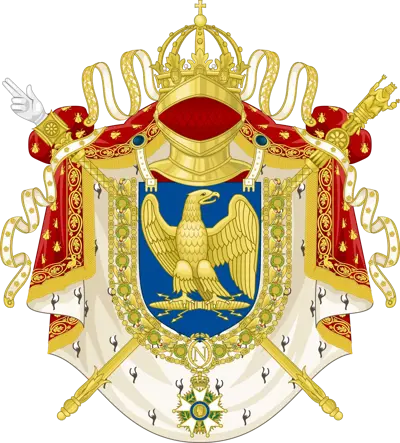
Napoléon Bonaparte was a French military and political leader of Corsican descent. He rose to prominence during the French Revolution and led several successful campaigns during the Revolutionary Wars. As Napoleon I, he was Emperor of the French from 1804 until 1814, and again in 1815. Napoleon dominated European and global affairs for more than a decade while leading France against a series of coalitions in the Napoleonic Wars. He won most of these wars and the vast majority of his battles, building a large empire that ruled over continental Europe before its final collapse in 1815. One of the greatest commanders in history, his wars and campaigns are studied at military schools worldwide. He remains one of the most celebrated and controversial political figures in human history.
