Robert Bork Quotes
Under the First Amendment's prohibition of the establishment of religion, the Court has steadily made religion a matter for the private individual by driving it out of the public arena.
Bork, Robert H. Coercing Virtue: The Worldwide Rule of Judges. AEI Press, 2003.


The Senate was presented with James Madison’s Language for the First Amendment. These three alternatives were proposed and rejected. The rejected versions turn out to have been very important. Some have argued that the First Amendment does not prohibit Congress making laws regarding religion as long as it doesn’t favor one religion over another—for example pay for clerics of all religions. However, that was the third proposal and it was rejected in favor of the high wall of separation proposed by Madison.


This is one of the key documents showing the “wall of separation of church and state” was in use in early America. Almost 200 years later the Chief Justice of the Supreme Court seemed ignorant of this communications. See William Rehnquist: {373663}


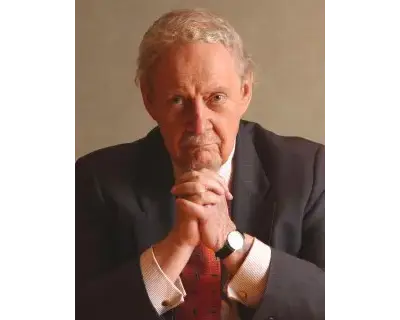
Robert Heron Bork was an American judge, government official, and legal scholar who served as the Solicitor General of the United States from 1973 to 1977. A professor at Yale Law School by occupation, he later served as a judge on the influential U.S. Court of Appeals for the D.C. Circuit from 1982 to 1988. In 1987, President Ronald Reagan nominated Bork to the U.S. Supreme Court, but the U.S. Senate rejected his nomination.
