John C. Calhoun Quotes
Two great duties which every citizen of proper age owes the republic: a wise and virtuous exercise of the right of suffrage; and a prompt and brave defense of the country in the hours of danger.
John C. Calhoun, 1782-1850, Vice President of the United States (Democrat, SC), U. S. Congressman & Senator (Democrat, SC), 1816
Sourced by: Eigen's Political and Historical Quotations


Many who oppose taxation of all kinds are very distressed by this quotation from Washington. This was made 4 years before the Constitutional Convention. Those who oppose military conscription are also not enamored by this quotation.


This quotation might have been an inspiration for the famous JFK quotation {589867}. See Khalil Gibran {601423}, Warren G. Harding {622594} and {629021}, and Oliver Wendell Holmes Jr. {603707} for similar sentiments. Holmes preceded Broderick by a few years, but Broderick came closest to the Kennedy phraseology.


Karsh was arguing that Arab citizens of Israel should be required to serve in the Israeli army and fight against other Arabs who have repeatedly attacked Israel. The Israeli tradition has been not to require Arab citizens to fight against what might be their own relatives. Karsh and others argue that Italian-Americans fought against other Italians in WWII, German-Americans fought against Germans.


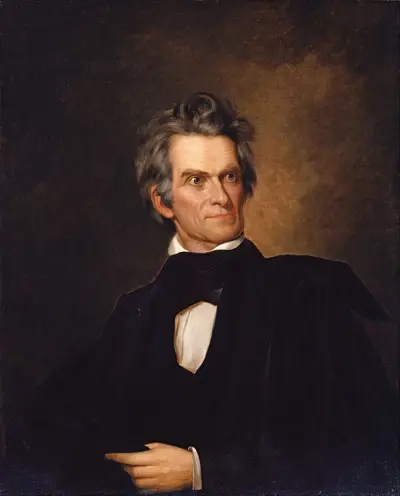
John Caldwell Calhoun was an American politician and political theorist from South Carolina who held many important positions including being the seventh vice president of the United States from 1825 to 1832, while adamantly defending slavery and protecting the interests of the white South when its residents were outnumbered by Northerners. He began his political career as a nationalist, modernizer, and proponent of a strong national government and protective tariffs. In the late 1820s, his views changed radically, and he became a leading proponent of states' rights, limited government, nullification, and opposition to high tariffs. He saw Northern acceptance of those policies as a condition of the South remaining in the Union. His beliefs and warnings heavily influenced the South's secession from the Union in 1860–1861.
