Fidel Castro Quotes
Twenty-six million Russians died in the defense of their homeland against the Nazis.
Castro, Fidel. "Reflections of Fidel." Granma, 2012.

The general was replacing George S. Patton as commander of the Third Army. Patton had opposed the deNazification policy of the allies and caused a great deal of public relations difficulty for the army command and the administration, as reporters would frequently print his views. Truscott was one of Patton’s loyal assistants. The minute he took over, the press wanted to find out if his views were the same as his former boss regarding the Nazis. They were quite different. Reporters had no story.


FDR was right about Russia being a major factor in stopping Hitler, but partially wrong about the danger of Russia. The Soviets never did dominate Europe although the tried, but they did dominate Eastern Europe.

The Russians had lost over 20 million of its people to German WWII hostilities. They wanted a vengeance and were willing to take the casualties that came with the invasion of Berlin and many other key cities that were heavily defended. Eisenhower and Churchill realized that this would give the Russians a very dominant military occupation of Eastern Europe and Eastern Germany. However, they did not want to take the huge casualties of all these battles. Politically, Churchill and American leaders had to explain to their right wings why Russia was involved as an equal partner in making occupation decisions about Germany.


The military security people were so used to ferreting out communists in the 1930s that they had a hard time adjusting to the fact that the security risks or people who might have German connections or backgrounds. Many immigrant scientists were recruited for work on the Manhattan project to build the atomic bomb and they only did security clearances. The military security people kept checking on any communist background they might have had as opposed to possible connections with fascist organizations. By the end of the war they had adjusted but then had to go back to looking for communists as the Cold War evolved.

The Prime Minister, Neville Chamberlain, preceded him with the announcement of declaration of war against Germany, but it was left up to the Foreign Minister to explain the implications. This was the first time in history that a nation had used radio to communicate such momentous events to its population.

There had been vicious assaults on most of the Black workers, when a few Negro welders were hired. The “compromise” was that the Negro workers would be protected from harm but there would be no Blacks in skilled positions. This was despite a huge labor shortage and a critical national need for the ships in the midst of war. Patriotism and the national crisis could not overcome the racism and hatred that existed in America. Northern newspapers pointed out the irony that America was practicing and upholding the racial theories of Hitler and the Nazis.


One of the predictions of the oncoming war with Germany.

This new form of patriotism, this encouragement of pregnancy—even outside of marriage—was just too controversial. Himmler withdrew the order. It illustrates that even in a brutal dictatorship, public opinion can influence government.

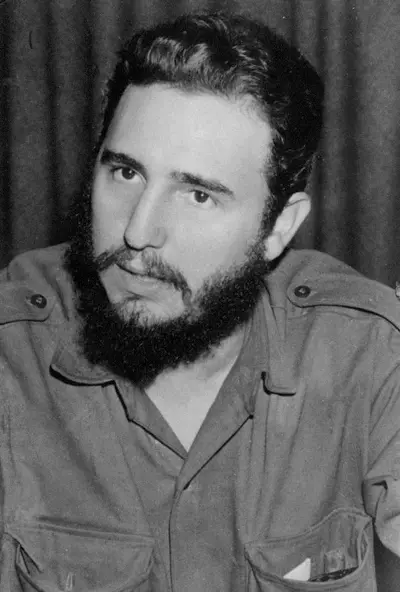
Fidel Alejandro Castro Ruz better known internationally as Fidel Castro, was a Cuban revolutionary and politician who served as Prime Minister of Cuba from 1959 to 1976 and President from 1976 to 2008. Ideologically a Marxist–Leninist and Cuban nationalist, he also served as the First Secretary of the Communist Party of Cuba from 1961 until 2011. Under his administration, Cuba became a one-party communist state; industry and business were nationalized, and state socialist reforms were implemented throughout society.
