Thomas Campbell Quotes
Truth ever lovely - since the world began, The foe of tyrants, and the friend of man.
Campbell, Thomas. The Pleasures of Hope; with Other Poems, Mundell & Son, 1799, p. 60.


She was referring to the political leaders of the South who were patriots and slave owners.


Although Wedgwood was a business man and ceramic manufacturer, he was a staunch abolitionist. He made these medallions by the thousands and gave them to all who would receive them. The text became the motto of the anti-slavery society. It was one of the first examples of a logo – a symbol for a political cause being very effective.


Even before we had a Constitution there was major opposition to slavery. The “price” of the American Union was the acceptance of the slavery of the South. But the hypocrisy of a country based on liberty to allow and enforce slavery was not lost on the founding fathers. Ironically the abolitionists among the founding fathers were certain that they could persuade the Southern slaveholders of the error of slavery in a few years and things would be set right in the land. Even George Washington {630626}, and Thomas Jefferson and some other slaveowners at the time wished to see its abolition. Slaveholding Southern Founding Fathers in general were so wary of the abolitionists that they achieved structural, disproportionate, power in the new Constitution to ward off the abolitionists attempts to reform slavery.


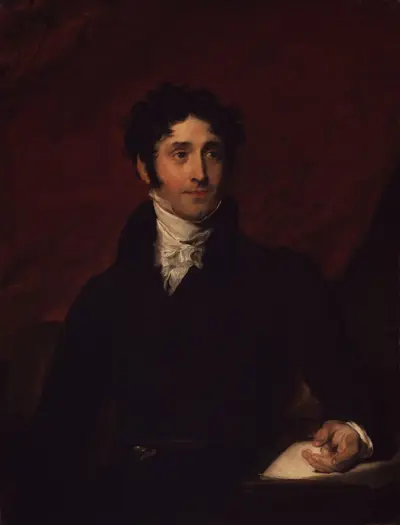
Thomas Campbell was a Scottish poet. He was a founder and the first President of the Clarence Club and a co-founder of the Literary Association of the Friends of Poland; he was also one of the initiators of a plan to found what became University College London. In 1799 he wrote "The Pleasures of Hope", a traditional 18th-century didactic poem in heroic couplets. He also produced several patriotic war songs—"Ye Mariners of England", "The Soldier's Dream", "Hohenlinden" and, in 1801, "The Battle of the Baltic".
