Iain Banks Quotes
Torture is such a slippery slope; as soon as you allow a society or any legal system to do that, almost instantly you get a situation where people are being tortured for very trivial reasons.
Banks, Iain M. Interview. The Guardian, 2008.

He was finally brought to justice after being protected by the right wing for many years. He was sentenced to 25 years in prison. See related quote.
Named after penal reformer Johne Howard, 1726-1790. Howard Associations have since been organized in many countries.
Major Fleener had been assigned to defend accused terrorists who were being held at the military prison in Guantanamo, Cuba. For several years they were held without a hearing or trial. Then the U. S. Supreme Court ruled that they had to be given a hearing or trial. A Military tribunal was selected. The methods and procedures of these hearings came under much public world-wide criticism as they did not meet the normal legal standards of most countries. Surprisingly, one of the military officers made public statements criticizing the army and the trials.


During that period some terrorists were handed over to Saudi Arabian and Egyptian authorities for interrogation. These countries had no qualms about torture. Goss never answered the question about that practice.


When TR came to office, the U. S. was in the midst of war with Philippine insurgents who were fighting an asymmetric , guerrilla war against the U. S. Army. The war had become very brutal with the insurgents using terror and atrocities and some Army units executing prisoners and torturing captives. Roosevelt, actually fired the General who was in charge of the field troops rather than just discipline lower level officers as usually has happened.

Clinton did believe that there might be a rare situation where extra judicial methods might be resorted to but he felt that those involved should be ready to take the responsibility and the consequence. He had suggested formalizing the theoretical exception, but then changed his mind as the exception would be abused.

After the assassination of Egyptian President Anwar Sadat hundreds of Egyptian religious fundamentalists were rounded up, jailed and tortured. al-Zawahiri broke under torture and revealed the names of some of his anti-government associates. Although he was not personally involved in the murder of Sadat, he served three additional years in jail. Motivated by has thirst for revenge at his torturers and his guilt at having been forced to betray his friend, he learned all he could about terrorism from the older Jihadists also in the same jail, and when he was released he elevated Islamic terrorism to another level by developing a strategy for the use of suicide bombers.

He was responsible for the genocide of 2 million Cambodians.


Chelsea Elizabeth Manning
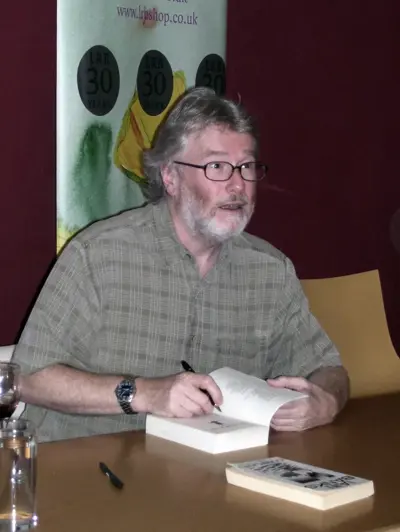
Iain Banks was a Scottish author, writing mainstream fiction as Iain Banks and science fiction as Iain M. Banks, adding the initial of his adopted middle name Menzies (/ˈmɪŋɪz/ (listen)). After the success of The Wasp Factory (1984), he began to write full time. His first science fiction book, Consider Phlebas, appeared in 1987, marking the start of the Culture series. His books have been adapted for theatre, radio and television. In 2008, The Times named Banks in their list of "The 50 greatest British writers since 1945". In April 2013, Banks announced he had inoperable cancer and was unlikely to live beyond a year. He died on 9 June 2013.
