Pol Pot Quotes
The leaders must be tortured fiercely in order that we may obtain a complete understanding of their organization.
He was responsible for the genocide of 2 million Cambodians.
Saloth Sar, 1925-1998, (Pol Pot), Cambodian Khmer Rouge Leader, Orders on how to handle captured leaders of a competing political bloc
Sourced by: Eigen's Political and Historical Quotations

He was finally brought to justice after being protected by the right wing for many years. He was sentenced to 25 years in prison. See related quote.
Major Fleener had been assigned to defend accused terrorists who were being held at the military prison in Guantanamo, Cuba. For several years they were held without a hearing or trial. Then the U. S. Supreme Court ruled that they had to be given a hearing or trial. A Military tribunal was selected. The methods and procedures of these hearings came under much public world-wide criticism as they did not meet the normal legal standards of most countries. Surprisingly, one of the military officers made public statements criticizing the army and the trials.


When TR came to office, the U. S. was in the midst of war with Philippine insurgents who were fighting an asymmetric , guerrilla war against the U. S. Army. The war had become very brutal with the insurgents using terror and atrocities and some Army units executing prisoners and torturing captives. Roosevelt, actually fired the General who was in charge of the field troops rather than just discipline lower level officers as usually has happened.

After the assassination of Egyptian President Anwar Sadat hundreds of Egyptian religious fundamentalists were rounded up, jailed and tortured. al-Zawahiri broke under torture and revealed the names of some of his anti-government associates. Although he was not personally involved in the murder of Sadat, he served three additional years in jail. Motivated by has thirst for revenge at his torturers and his guilt at having been forced to betray his friend, he learned all he could about terrorism from the older Jihadists also in the same jail, and when he was released he elevated Islamic terrorism to another level by developing a strategy for the use of suicide bombers.


She had saved over 2000 Jewish Children in the Warsaw Ghetto from Death by the Nazis. As a member of the Polish Resistance, she was caught be the Germans, badly tortured, and sentenced to death which she narrowly escaped.

Under torture many people will tell their interrogators what they want to hear --- accurate or not.


Two years later the CIA adopted an official formal policy against inhumane treatment during interrogation and the manual was changed.


Chelsea Elizabeth Manning

At that time in American History, the George W. Bush Justice Department had a small team of lawyers who wrote a legal brief that defined torture in such a way that many of the most common forms of torture were no longer legal torture, even though they had been torture in American law and were again torture after this embarrassing episode of American history. The renamed techniques were called “enhanced interrogation” and a few terrorist suspects were subjected to it before the rules and laws were changed and the “legal opinions” nullified. The FBI and military intelligence did not use the so called enhanced interrogation techniques as they felt that torture produced unreliable intelligence as the victim will say anything the questioner wants to hear to end the torture. They also thought the Justice department memo was sloppy and defective legal work. Senator McCain was a particular expert on torture in that he had, during the Vietnam War, been captured and imprisoned for 7 years during which he had been tortured on several occasions.


Named after penal reformer Johne Howard, 1726-1790. Howard Associations have since been organized in many countries.
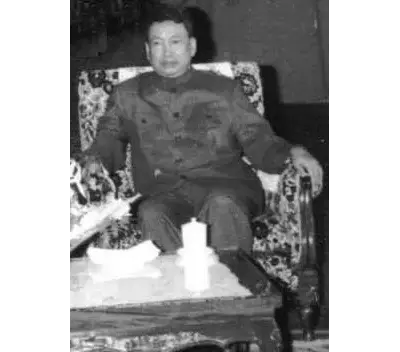
Pol Pot was a Cambodian revolutionary and politician who governed Cambodia as the Prime Minister of Democratic Kampuchea between 1975 and 1979. Ideologically a Marxist–Leninist and a Khmer nationalist, he was a leading member of Cambodia's communist movement, the Khmer Rouge, from 1963 until 1997 and served as the General Secretary of the Communist Party of Kampuchea from 1963 to 1981. Under his administration, Cambodia was converted into a one-party communist state governed according to Pol Pot's interpretation of Marxism–Leninism.
