Zalmay Khalilzad Quotes
Today we're seeing fundamental conflicts within political Islam, with the fundamentalists on the one side and the moderates on the other. Who gains the upper hand means a great deal to the world.
Khalilzad, Zalmay. "SPIEGEL Interview with US Ambassador to Iraq: 'We Are Not Going to Abandon Iraq'." Der Spiegel, 6 Mar. 2006.


Over a century ago, modern Islamists were critical of the Wahhabi sect for their extremism. Unfortunately, the Saudi Arabian royal family whose absolute control of the kingdom could be threatened by an extremist religious movement, cut a deal with the Wahhabi that not only gave them control over all religious and legal interpretations of Sharia in the kingdom, but also gave them large amounts of money with which the Wahhabi expanded and exported their extremist brand of Islam to many other counties—including the United States. A large part of the Islamic terrorism of the end of the 20th century into the 21st was caused by fanatics who had been exposed to Wahhabi schools (madrassas), mosques or materials which are virulently anti-Christian and ant-Semitic. Muslim intellectuals like Muhammad Abduh had warned about extremism in general and Wahhabi extremism in particular.


Islamic religious extremists do not allow freedom of religion, freedom of speech, freedom of the press, right to life, freedom from torture and mutilation, self-government, gender equality, protection of children or women from violence, sexual freedom, freedom of expression, reproductive rights for women, right work, which are just a few. The modern Islamic extremists allow about the same human rights as did the Christian Kings and the Church of 1000 years ago. Ironically, it is less respect for human rights that many of the great Islamic societies provided 1000 years ago.

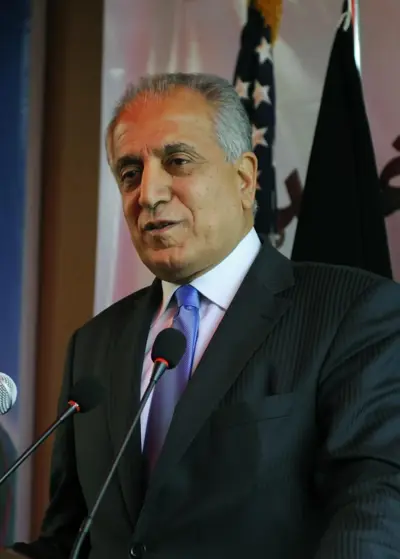
Zalmay Mamozy Khalilzad (Pashto/Dari: زلمی خلیلزاد Zalmay Khalīlzād; born March 22, 1951) is an Afghan-American diplomat, who has served as the Special Representative for Afghanistan Reconciliation at the State Department since September 2018. Previously, he served as a counselor at the Center for Strategic and International Studies (CSIS) and the president of Gryphon Partners and Khalilzad Associates, an international business consulting firm, based in Washington, D.C.
