Paul Berg Quotes
Today, it is research with human embryonic stem cells and attempts to prepare cloned stem cells for research and medical therapies that are being disavowed as being ethically unacceptable.
Berg, Paul. "Asilomar and Recombinant DNA." NobelPrize.org, Nobel Media AB, 26 Aug. 2004.


This is a classic example of a legislator, concerned about the ethics and morality of certain types of scientific experiments, and not understanding the scientific meaning of the terms used, would also make illegal existing and important technologies and cures. In this case, he thinks of cloning as reproducing another exact human being, but we clone human cells every day to produce many of the beneficial medicines we use commonly. And the combination of animals and humans is common in many aspects of modern medicine. For burns the tissue of pigs is used to cover the wound and act as a scaffold on which human skin cells grow. There are millions of people in America and the rest of the world who are leading a normal life with a pig or a cow heart valve. There are ethical problems to be sure but most legislators have little clue as to what they are, and tend to want to outlaw whole areas of science out of their ignorance in in reaction to public pressure from others who do not understand what it is that they want to prohibit.


At the time the president made this quotation there were over 400,000 frozen embryos stored in fertility clinics across the country that were no longer necessary for the couples who had created them and for which no other couples could be found. Each costs about $2,000 a year to maintain in a viable state. Some are destroyed as no longer necessary and others are given to scientists for research. Most just stay in frozen storage with no prospect of ever being brought to term.

When couples use in vitro fertilization to have children, they usually produce several fertilized embryos one of which is implanted into the womb of the mother. The other embryos can produce stem cells which are cells that can grow into any other kind of cell—brain cells, bone, cells, kidney cells, stc. Therefore they have the most promise for medical research. However, some people regard the embryos as human beings at an early stage of development and see the embryos as life. For them the notion of using that “life” for medical research where a human being will not be produced but instead a medicine or replacement cells for a sick person crosses a moral line of what is proper for a life form. Others observe that the embryos are kept alive in freezers and will be thrown away if not needed so why not use them to help mankind. At the other extreme some are opposed to allowing in vitro fertilization to begin with, but there have been over a million people born with this technique to couples who otherwise would not have been able to have children.

This was written over 2 decades before Dolly the sheep was first cloned. Since his call for a societal public discussion about cloning, there has been very little, but by the 21st century there had been just a few hasty, ill-informed, almost hysterical efforts to legislate on the subject.
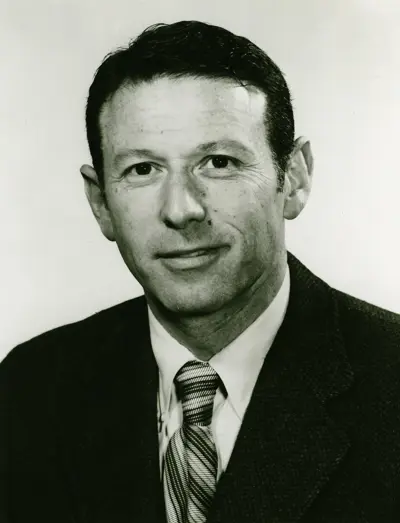
Paul Berg is an American biochemist and professor emeritus at Stanford University. He was the recipient of the Nobel Prize in Chemistry in 1980, along with Walter Gilbert and Frederick Sanger. The award recognized their contributions to basic research involving nucleic acids. Berg received his undergraduate education at Penn State University, where he majored in biochemistry. He received his Ph.D. in biochemistry from Case Western Reserve University in 1952. Berg worked as a professor at Washington University School of Medicine and Stanford University School of Medicine, in addition to serving as the director of the Beckman Center for Molecular and Genetic Medicine. In addition to the Nobel Prize, Berg was presented with the National Medal of Science in 1983 and the National Library of Medicine Medal in 1986. Berg is a member of the Board of Sponsors for the Bulletin of the Atomic Scientists.
