Leon Kass Quotes
I've been opposed to human cloning from the very beginning.
Dreifus, Claudia. "A Conversation with Leon R. Kass; A Free-Ranging Bioethicist..." The New York Times, 19 Feb. 2002, p. F3.


This is a classic example of a legislator, concerned about the ethics and morality of certain types of scientific experiments, and not understanding the scientific meaning of the terms used, would also make illegal existing and important technologies and cures. In this case, he thinks of cloning as reproducing another exact human being, but we clone human cells every day to produce many of the beneficial medicines we use commonly. And the combination of animals and humans is common in many aspects of modern medicine. For burns the tissue of pigs is used to cover the wound and act as a scaffold on which human skin cells grow. There are millions of people in America and the rest of the world who are leading a normal life with a pig or a cow heart valve. There are ethical problems to be sure but most legislators have little clue as to what they are, and tend to want to outlaw whole areas of science out of their ignorance in in reaction to public pressure from others who do not understand what it is that they want to prohibit.

Freedman was the producer and narrator of a TV series on sophisticated topics of science. There are a number of jurisdictions in the world where it is not a crime to clone a human being. Once someone implants a clone into a human female, there is little society can do little to “prevent” the clone from being born. Many religious fundamentalists who oppose human cloning will fight to protect the life of the clone baby in utero. For all we know, clones have already been born and are attending school with other children as no one could easily tell that a child (or an adult) is a clone.
He had successfully cloned dogs, cats, sheep and an entire herd of cattle, and is one of the most advanced cloning scientists in the world.
Once someone implants a clone into a willing human female, there is little society can do to “prevent” the clone from being born unless an abortion were forced on the woman. Many religious fundamentalists who oppose human cloning will fight to protect the life of the clone baby in utero. Eigen’s article observed, for all we know, clones have already been born and are attending school with other children as no one could easily tell that a child (or an adult) is a clone. The Lutheran Church has already taken the position that if a clone were born, the clone would be eligible for membership in the Church and be welcome.


He prefaced his remarks by stating that he was speaking for himself and not the Commission.

Kass was appointed for his religious, anti abortion views and he is an excellent proponent of one perspective. There are others who do not necessarily see human cloning in such a dark light. Although, the process has to be developed, at some time it well might be a mode by which infertile people could have children. Kass’s criticisms were made by others when in vitro fertilization techniques were being developed.


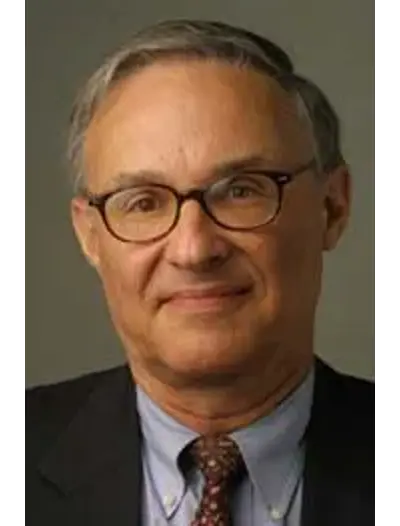
Leon Richard Kass is an American physician, scientist, educator, and public intellectual. Kass is best known as a proponent of liberal education via the "Great Books," as a critic of human cloning, life extension, euthanasia and embryo research, and for his tenure as chairman of the President's Council on Bioethics from 2001 to 2005. Although Kass is often referred to as a bioethicist, he eschews the term and refers to himself as "an old-fashioned humanist. A humanist is concerned broadly with all aspects of human life, not just the ethical."
