Leon Kass Quotes
All parties to the human embryo debate have something vital to defend.
Leon Kass, Biologist & Chairman, President’s Council on Bioethics, Speech, College of the Holy Cross, March 21, 2005
Sourced by: Eigen's Political and Historical Quotations

When couples use in vitro fertilization to have children, they usually produce several fertilized embryos one of which is implanted into the womb of the mother. The other embryos can produce stem cells which are cells that can grow into any other kind of cell—brain cells, bone, cells, kidney cells, stc. Therefore they have the most promise for medical research. However, some people regard the embryos as human beings at an early stage of development and see the embryos as life. For them the notion of using that “life” for medical research where a human being will not be produced but instead a medicine or replacement cells for a sick person crosses a moral line of what is proper for a life form. Others observe that the embryos are kept alive in freezers and will be thrown away if not needed so why not use them to help mankind. At the other extreme some are opposed to allowing in vitro fertilization to begin with, but there have been over a million people born with this technique to couples who otherwise would not have been able to have children.


Kass was appointed by President George W. Bush to Chair The President’s Council on Bioethics in large part because Kass takes the position of the religious right, Bush’s basic constituency, that embryos are human beings and should be treated as such. This quotation illustrates the anthropomorphism with which Kass comes to the scientific and ethical debate.

When a couple sought assistance from a fertility clinic, the best medical procedure to fertilize a few female egg cells with sperm. After a few days of development, the seemingly best embryo is selected for implantation in the mother. The others are usually frozen so that they can be used later if there is a miscarriage or the baby dies in childbirth. The Senator and a few other religious fundamentalists believe that the fertilized cell clusters are actually human beings. Therefore if there is a successful birth, the remaining ones should not be used for research using the embryonic stem cells. On the other hand, many are often discarded as most people do not see the cell clusters as a human being but as a potential human being just as a pile of bricks and a truck of cement is not a house but is a potential house if things are done properly.


One of the extreme religious fundamentalists in the Congress, Brownback was referring to Federally funded medical research which uses embryonic stem cells. The cells are generated from in vitro fertilization procedures and potentially if implanted in the womb of a woman could produce a child. Several cells are produced by the fertilization process but typically only one or two is needed. So some religious extremists believe that just because the cell has the potential for human life, it is human life. This is the same logic which opposes birth control on the grounds that sperm and egg cells are incipient life forms. It was as late as 1973 that bans on birth control devices were declared unconstitutional be the Supreme Court.


At the time the president made this quotation there were over 400,000 frozen embryos stored in fertility clinics across the country that were no longer necessary for the couples who had created them and for which no other couples could be found. Each costs about $2,000 a year to maintain in a viable state. Some are destroyed as no longer necessary and others are given to scientists for research. Most just stay in frozen storage with no prospect of ever being brought to term.

Portugal, a traditional Roman Catholic nation where the Church has always had great influence, had laws banning abortion. However, in a national referendum the Portuguese people voted overwhelming to allow abortion despite the Church’s stand. The Parliament then overwhelmingly passed a law legalizing abortion on demand up to the 10 the week of pregnancy. The President, though opposed personally to abortion signed the bill. This quotation illustrates a common occurrence in industrial democracies whereby politicians will not impose their personal moral views on the laws of society but may well have contrary personal views.


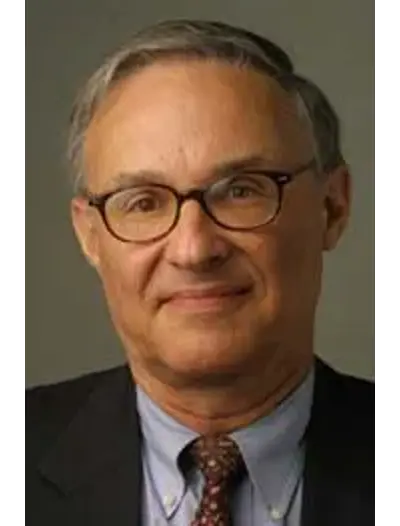
Leon Richard Kass is an American physician, scientist, educator, and public intellectual. Kass is best known as a proponent of liberal education via the "Great Books," as a critic of human cloning, life extension, euthanasia and embryo research, and for his tenure as chairman of the President's Council on Bioethics from 2001 to 2005. Although Kass is often referred to as a bioethicist, he eschews the term and refers to himself as "an old-fashioned humanist. A humanist is concerned broadly with all aspects of human life, not just the ethical."
