Alfred Rosenberg Quotes
Today a new faith is stirring: the myth of blood, the faith that along with blood we are defending the divine nature of man as a whole.
Rosenberg, Alfred. The Myth of the Twentieth Century: An Evaluation of the Spiritual-Intellectual Confrontation of Our Age. Translated by Vivian Bird, Noontide Press, 1982, p. 114.


The Afrikaner’s were the descendants of the Dutch farmers who were the first white immigrants to South Africa. They ended up dominating the political scene of South Africa and other white minorities had little political power. The Blacks and Coloreds (Indians) had none in the Afrikaner Apartheid regime. This was a constant theme of the Afrikaners to the other White minorities that if the Afrikaner Apartheid and control of the Black majority, the other white minorities would suffer, This turned out not to be true however. When the Afrikaners were pushed out of control, Nelson Mandella led the Blacks to a non-vengeful creation of a new state, where most of the white minorities were reasonably happy except for some of the diehard Afrikaner racists. Botha was the political leader of the Afrikaners.


The American army which had occupied the Philippines before Taft was appointed Governor General was extremely racist and discriminatory towards the Philippine people. Taft and his wife invited Filipinos to the Governor’s mansion and socialized with them whereas the Army officers and men never did. See {639174}.


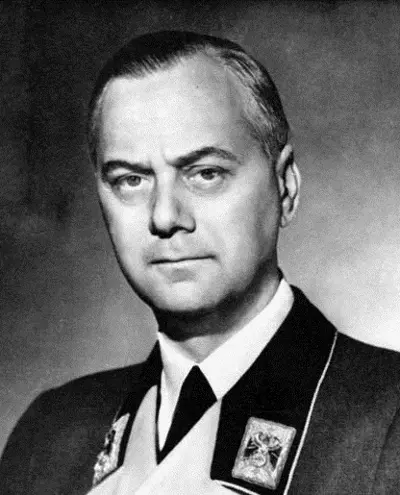
Alfred Ernst Rosenberg was a Baltic German Nazi theorist and ideologue. Rosenberg was first introduced to Adolf Hitler by Dietrich Eckart and held several important posts in the Nazi government. He was the head of the NSDAP Office of Foreign Affairs during the entire rule of Nazi Germany (1933–1945), and led Amt Rosenberg ("Rosenberg's bureau"), an official Nazi body for cultural policy and surveillance, between 1934 and 1945. During World War II, Rosenberg was the head of the Reich Ministry for the Occupied Eastern Territories (1941–1945). After the war, he was convicted of crimes against peace; planning, initiating and waging wars of aggression; war crimes; and crimes against humanity at the Nuremberg trials in 1946. He was sentenced to death and executed on 16 October 1946.
