William Jennings Bryan Quotes
to supplement the local government in protecting his property when he enters into a contest with his employees.
The capitalist wants a standing army
William Jennings Bryan, 1860-1925, U. S. Secretary of State, U. S. Congressman (Democrat, NB), 3 Time Unsuccessful Democratic Presidential Candidate, Quoted in Hofstadter, The American Political Tradition, Vintage, 1948
Sourced by: Eigen's Political and Historical Quotations

This size standing army which alarmed so many at the beginning of the 20th century, looked very small when compared with the standing army of America a century later. For earlier American Politician’s views on a standing army, see {592824}, {631687}, {622888}, and {641008}.


She saw strikes as wasteful where the workers and the companies, the public and the government lost. She favored arbitration which was generally opposed by labor and management and still is today in most cases.


In 1892 President Harrison and the Republicans were trying to win a second term and were embarrassed by a bloody strike and riot at the Homestead steel works. Frick, the Homestead General Manager, was visited by a Republican emissary suggesting that Frick recognize the union and reduce the public embarrassment.. The Republicans lost to Grover Cleveland and the Democrats.


This was praise indeed as Wellman was generally very conservative.

“Operators” referred to an Executives of the Coal Mining Companies most of whom were grossly impolite and unconstructive in the mediation sessions. The President was a very fit man who boxed and wrestled several times a week for exercise and could get very physical as well as social and intellectual.


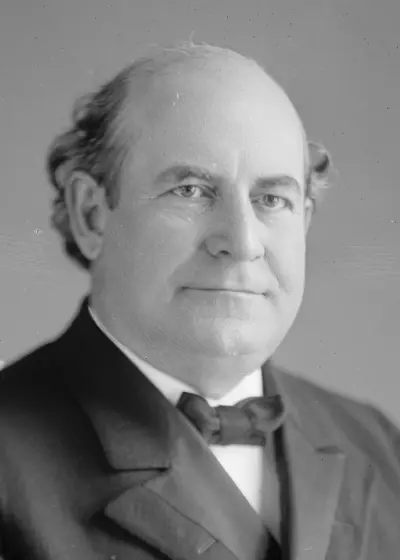
- Born: March 19, 1860
- Died: July 26, 1925
- Nationality: American
- Profession: Lawyer
William Jennings Bryan was an American orator and politician from Illinois and Nebraska. Beginning in 1896, he emerged as a dominant force in the Democratic Party, running three times as the party's nominee for President of the United States in the 1896, 1900, and 1908 elections. He also served in the United States House of Representatives and as the United States Secretary of State under Woodrow Wilson. Because of his faith in the wisdom of the common people, he was often called "The Great Commoner".
