Friedrich Hayek Quotes
To rest the case for equal treatment of national or racial minorities on the assumption that they do not differ from other men is implicitly to admit that factual inequality would justify unequal treatment, and the proof that some differences do, in fact, exist would not be long in forthcoming. It is of the essence of the demand for equality before the law that people should be treated alike in spite of the fact that they are different.
Hayek, Friedrich A. The Constitution of Liberty. University of Chicago Press, 1960, p. 86.


See also James Mathew for the analogy of British justice and the Ritz Hotel.


This was the infamous opinion whereby the Supreme Court upheld the “separate but equal” doctrine thereby preserving racial discrimination until the reversal over 50 years later. See the sole dissent of Justice John Marshall Harlan whose views were those that eventually prevailed although at the time all the other justices voted with the majority. See {583706} and {583703}.


See Quotation 346648 for his conclusion of this predicate.


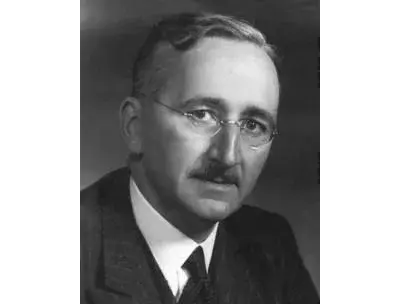
Friedrich August von Hayek CH FBA, often referred to by his initials F. A. Hayek, was an Austrian-British economist and philosopher who is best known for his defence of classical liberalism. Hayek shared the 1974 Nobel Memorial Prize in Economic Sciences with Gunnar Myrdal for his "pioneering work in the theory of money and economic fluctuations and [...] penetrating analysis of the interdependence of economic, social and institutional phenomena". His account of how changing prices communicate information that helps individuals co-ordinate their plans is widely regarded as an important achievement in economics, leading to his Nobel Prize.
