Adam Clayton Powell Jr. Quotes
To demand these God-given rights is to seek black power
Adam Clayton Powell Jr., 1908-1972, U. S. Congressman (Democrat, NY), Graduation Address, Howard University, Washington, D.C., May 29, 1966
Sourced by: Eigen's Political and Historical Quotations

This was the speech that started the "Black Power" Movement. The rally was held in a city park to Protest the murder just 10 days before of the civil rights activist, James Meredith. It also marked the break between the Student Nonviolent Coordinating Committee (SNCC) and the nonviolent movement lead by Martin Luther King. Because of that, the speech received so much publicity that "Black Power" became a significant political term instantly.

This appears to be the first use of the phrase "Black Power."


This phrase was also to be used over 100 years later by Malcolm X. See {624101} and {38291}.


He had written this text on a newspaper when he was jailed in Birmingham for violating a court order not to demonstrate. A common tactic of the Southern segregationists was to have local segregationist judges issue injunctions against civil rights demonstrations on the grounds that they would promote violence. These were generally unconstitutional, but King and others were jailed until the legal appeal could even be heard.


Throughout the Jim Crowe era of the South, the Southern whites were the poorest Americans with the exception of the Blacks, with few economic and cultural opportunities compared with the rest of the nation, the schools were the weakest of any area of the nation, the universities behind, and politically even whites had few choices with single party (Democratic Party) rule. While desegregation was fought tooth and nail by most white Southerners, it had the effect of elevating all phases of Southern life go that the gap between the South and the rest of the country diminished considerably. But the Blacks were also freed from the evil system and that was the “price” to the whites to which Baldwin referred.

Freedom Rides were interracial groups of Civil Rights advocates who boarded public interstate busses in Washington and rode South through some of the most segregated communities in the country. As the bus stopped at the segregated rest stops, the Black Freedom Riders would use the “white” waiting rooms, toilets, and other facilities which was against the local custom and law. Racist segregationists often brutalized and assaulted the Freedom riders whose leaders demanded Federal Protection. The Attorney General and others were trying to get the local politicians and law enforcement officials to protect the Freedom Riders, but often these were the worst of the racist segregationists. Kennedy thought if he could have a “cooling off period” for a few days, he could persuade the locals to protect the Freedom Riders from the mobs with the threat of sending Federal Marshalls or troops for the protection. So he asked Farmer and other Freedom Ride organizers to stop the Freedom Rides for a few days. This was Farmer’s famous response. The Freedom Rides continued and forced the Federal Government to respond on a timetable they did not prefer.


Lieber was assigned by President Lincoln to study the then international laws of war and prepare a manual for the guidance of union troops in the Civil War. Lincoln then issued the document as a general order. This statement was critical in inhibiting the South from making good on their threat to enslave any Black Union Soldier Captured and to execute any Union Black soldier who was a runaway slave from the South. Lincoln threatened to retaliate and also to hold senior Confederate officers accountable for following these rules. General Sherman and other Union Senior Officers executed a few Confederate soldiers who violated rules of the order and the “illegal” practices stopped, and with few exceptions the senior officers of both sides followed Lieber’s rules. These rules, with few modifications, governed U. S. military policies and rules through the Second World War.

This was the last public speech that Lincoln made before he was shot.


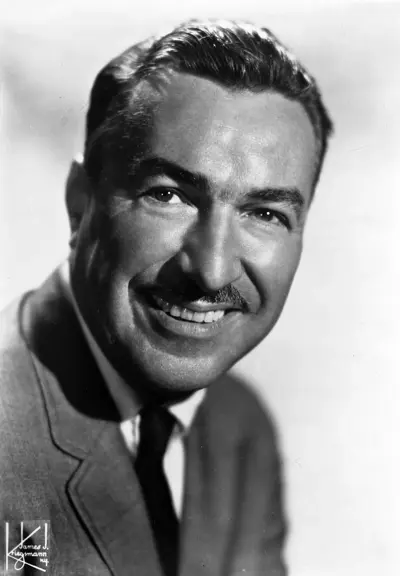
Adam Clayton Powell Jr. was an American Baptist pastor and politician who represented the Harlem neighborhood of New York City in the United States House of Representatives from 1945 until 1971. He was the first African-American to be elected from New York to Congress. Re-elected for nearly three decades, Powell became a powerful national politician of the Democratic Party, and served as a national spokesman on civil rights and social issues. He also urged United States presidents to support emerging nations in Africa and Asia as they gained independence after colonialism.
