Primo Levi Quotes
To accuse another of having weak kidneys, lungs, or heart, is not a crime; on the contrary, saying he has a weak brain is a crime.
Levi, Primo. Other People's Trades. Translated by Raymond Rosenthal, Summit Books, 1989, p. 195.

Usually Jefferson was the strongest voice for rights with no loopholes. However, he wanted to have a slander exception as this quote shows. However, the issue is what happens if a government official or an agency believed that it has been falsely slandered? If Jefferson’s proposal was accepted completely, the government and officials could sue someone who published negative information that they thought was false. Our supreme court has limited the exception to private parties who were NOT “public figures” unless the publisher knew the information was false and proceeded anyway for malicious reasons.
England and most other countries do not have such an exception and the press is very timid about criticizing the government or officials lest they make a mistake .
The word “printer” had a slightly different meaning then. In Jefferson’s time the printer was also the publisher, Benjamin Franklin was known as a printer but he not only published material but wrote much of it himself. This was typical. So Jefferson is concerned with the rights of the printer, the publisher and the writer.


This principle was incorporated into American law by the Supreme Court 1964 decision in Sullivan v. New York Times, where this argument drove the opinion.

This distinction is the basis for the Supreme Court Decision in New York Times v Sullivan where they ruled that the libel of a public figure is not to be punished unless it was malicious and not just defamatory. In England, a person can be sued for slandering a politician. Worse, truth is not an absolute defense in a libel suit in England as it is in the United States.


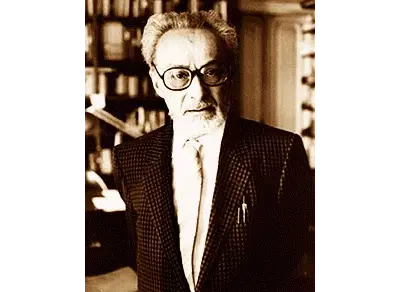
Primo Michele Levi was an Italian Jewish chemist, partisan, Holocaust survivor and writer. He was the author of several books, collections of short stories, essays, poems and one novel. His best-known works include If This Is a Man (1947, published as Survival in Auschwitz in the United States), his account of the year he spent as a prisoner in the Auschwitz concentration camp in Nazi-occupied Poland; and The Periodic Table (1975), linked to qualities of the elements, which the Royal Institution named the best science book ever written.
