Simon Singh Quotes
Libel law was developed to protect the reputations of individuals, not corporations.
Singh, Simon. Interview. Index on Censorship, 2010.


This distinction is the basis for the Supreme Court Decision in New York Times v Sullivan where they ruled that the libel of a public figure is not to be punished unless it was malicious and not just defamatory. In England, a person can be sued for slandering a politician. Worse, truth is not an absolute defense in a libel suit in England as it is in the United States.


In a 1980 South Carolina congressional campaign Democratic candidate Tom Turnipseed accused Atwater of masterminding anonymous phone calls to voters revealing the fact that, as a teenager, Turnipseed had received electroshock therapy. Atwater told the press:


A critical difference between English and American law is that truth is an absolute defense in the U. S. but is not in Great Britain. In the case of public figures, "the great," even truth is not required in U. S. law. It is not against American law to slander public figures as long as it is not malicious.

This is the earliest surviving attempt of the Romans to formulate a legal code.

The libel and slander laws in England were then, and are today, dramatically different from those of the United States in two fundamental ways: In America truth is an absolute defense; in England you can’t say true things about people which are personally libelous. Second, in America politicians and public figures are not entitled to a verdict even if the statements are inadvertently or possibly false. Without the Constitutional protections of freedom of speech and freedom of the press, the reputations of people including public figures are given much more weight in England than in America.

Usually Jefferson was the strongest voice for rights with no loopholes. However, he wanted to have a slander exception as this quote shows. However, the issue is what happens if a government official or an agency believed that it has been falsely slandered? If Jefferson’s proposal was accepted completely, the government and officials could sue someone who published negative information that they thought was false. Our supreme court has limited the exception to private parties who were NOT “public figures” unless the publisher knew the information was false and proceeded anyway for malicious reasons.
England and most other countries do not have such an exception and the press is very timid about criticizing the government or officials lest they make a mistake .
The word “printer” had a slightly different meaning then. In Jefferson’s time the printer was also the publisher, Benjamin Franklin was known as a printer but he not only published material but wrote much of it himself. This was typical. So Jefferson is concerned with the rights of the printer, the publisher and the writer.


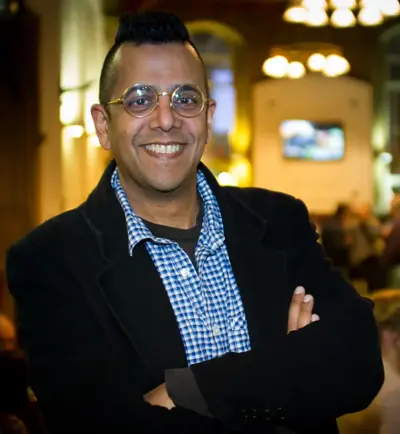
Simon Lehna Singh, MBE is a British popular science author, theoretical and particle physicist whose works largely contain a strong mathematical element. His written works include Fermat's Last Theorem (in the United States titled Fermat's Enigma: The Epic Quest to Solve the World's Greatest Mathematical Problem), The Code Book (about cryptography and its history), Big Bang (about the Big Bang theory and the origins of the universe), Trick or Treatment? Alternative Medicine on Trial (about complementary and alternative medicine, co-written by Edzard Ernst) and The Simpsons and Their Mathematical Secrets (about mathematical ideas and theorems hidden in episodes of The Simpsons and Futurama). In 2012 Singh founded the Good Thinking Society, through which he created the website "Parallel" to help students learn mathematics.
